
Table of Content
- Top Orthodontist in Brooklyn
- What Are Braces?
- Types of Braces
- Benefits of Braces
- Ideal Candidates for Braces
- Personal Consultation with Dr. Ingberman
- Preparation for Braces
- Braces Treatment Process
- Recovery and Aftercare
- Results and Timeline
- Complementary Treatments
- Cost of Braces in Brooklyn
- Contact Us
- Frequently Asked Questions
- References
Braces are one of the most trusted and effective ways to straighten teeth and correct bite issues. At any given moment, millions of people (kids, teens, and adults alike) are wearing braces to achieve healthier, aligned smiles. These orthodontic appliances gradually move crooked or crowded teeth into place, fixing problems from gaps to overbites.
Located in Brooklyn, Brace Central Orthodontics is led by Dr. Polina Ingberman, DDS, a orthodontist with over a quarter century of expertise, and Dr. Amalya Igityan, DDS, a board-certified orthodontist with extensive experience. Our doctors and team are dedicated to a patient-first approach, making orthodontic treatment comfortable and personalized for every patient. We offer state-of-the-art brace options to fit your needs, including Damon™ braces, Symetri porcelain brackets by Ormco, and Votion braces. Contact us today to schedule a consultation and find out if braces are right for you or your child.
Top Orthodontist in Brooklyn
Brace Central has provided orthodontic care to Brooklyn families for over a quarter century, led by Dr. Polina Ingberman, DDS We treat children, teens, and adults with three bracket systems chosen for the case: Damon self-ligating brackets, Symetri Clear porcelain brackets from Ormco, and Votion brackets.
Every treatment plan starts with a digital impression, panoramic X-ray, and a one-on-one conversation about your goals. Our hygienists work alongside Dr. Ingberman to keep your teeth and brackets clean throughout treatment, a service most Brooklyn orthodontic offices don’t offer.
Call (718) 998-1888 to schedule a consultation.
What Are Braces?
Braces are an orthodontic system that uses brackets bonded to your teeth and connected by archwires to apply continuous, gentle pressure. Over months, this pressure moves teeth into a healthier alignment and improves crowding, gaps, and bite issues. The American Association of Orthodontists recommends a first orthodontic evaluation by age 7 [1], because some bite problems are easier to correct while the jaw is still developing. Adults benefit too: orthodontic treatment for adults has expanded substantially over the past two decades.
At Brace Central, we use three bracket systems. Dr. Ingberman recommends one based on your case, not a one-size approach.
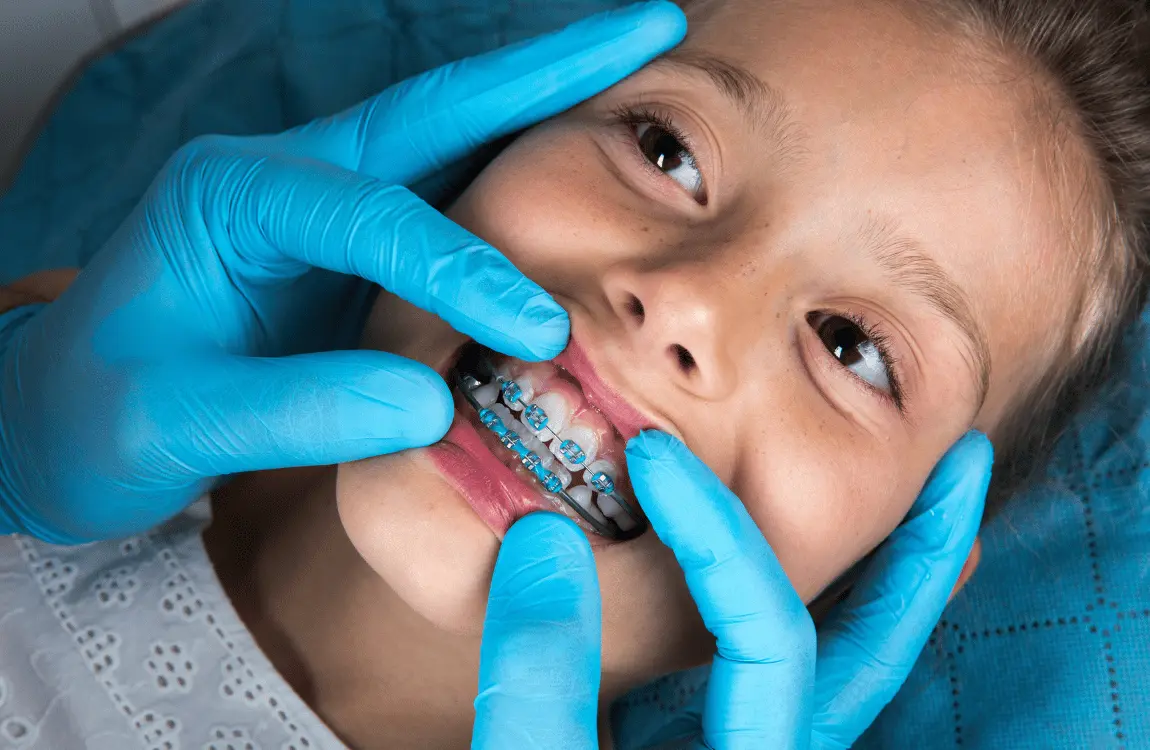

Types of Braces
At Brace Central Orthodontics, we offer several types of braces to match your lifestyle and preferences. Our doctors will recommend the best type for your specific case. Our options include:
Damon Braces
Damon™ braces are advanced self-ligating metal braces. Instead of using elastic ties to hold the wire, Damon brackets have a special slide mechanism that holds the archwire in place. This allows the wire to move freely as your teeth shift, which can result in faster treatment and fewer adjustment appointments. Damon braces are also known for being comfortable and easier to keep clean than traditional braces, since they don’t have rubber bands that can trap food.
Symetri Clear Braces
Symetri Clear brackets from Ormco are a type of ceramic braces that blend in with your teeth. These brackets are made of a translucent porcelain material, making them far less noticeable than metal braces, a great option if you want a more discreet look. Despite being clear, Symetri brackets are strong and effective. They work just like metal braces to straighten your teeth, but with the aesthetic advantage of barely being visible in photos or everyday life.
Votion Braces
Votion braces are a modern take on traditional stainless steel braces. These metal brackets are designed with a low-profile shape for comfort inside your mouth. Votion brackets still use elastic ties, but their innovative design ensures they bond securely and guide teeth efficiently. They’re a reliable, cost-effective choice for patients looking for tried and true braces that get the job done. Dr. Ingberman might recommend Votion braces for cases that can be well treated with a classic, high-quality bracket system.
Benefits of Braces

A straight, well-aligned smile isn’t just about looking good, it also promotes better oral health and function. Orthodontic treatment with braces offers both cosmetic and health benefits, including:
- Enhanced confidence: By correcting crooked teeth or gaps, braces help you achieve a beautiful smile that can greatly boost your self-esteem.
- Improved bite and speech: Aligning the teeth and jaws can fix bite problems, making it easier to chew food and even improving speech clarity for some patients.
- Easier cleaning: Straighter teeth are simpler to brush and floss, reducing the risk of cavities and gum disease since there are fewer hard-to-reach spots.
- Less wear and strain: Properly aligned teeth come together evenly, preventing excessive wear, grinding, or chipping that can occur with a misaligned bite.
- Better overall oral health: By addressing crowding or bite issues, braces can alleviate jaw pain or discomfort and reduce the likelihood of future dental complications.
All these benefits contribute to healthier teeth and gums in the long run. When your smile is aligned, it’s easier to maintain and sets the foundation for a lifetime of good oral health.
Ideal Candidates for Braces
Braces work for patients across a wide age range and a broad set of orthodontic needs:
- Children (ages 7+): early evaluation catches bite problems while the jaw is still developing
- Teenagers: the most common braces age, with treatment fitting around school and activities
- Adults: orthodontic treatment is increasingly common for adults addressing crowding, gaps, or post-treatment relapse
- Patients with crossbites, overbites, or underbites that benefit from bracket-and-wire precision
- Patients with significant crowding requiring controlled, sequential tooth movement
Braces aren’t right for every case. Patients with active gum disease, untreated cavities, or insufficient bone support should resolve those issues first. During your consultation, our doctors will review your dental history and X-rays to confirm braces are the right fit, or recommend an alternative.
Personal Consultation with Dr. Ingberman
Dr. Polina Ingberman, DDS, is the founder of Brace Central and She has treated Brooklyn patients for over a quarter century, with a clinical focus on comprehensive orthodontics for children, teens, and adults.
A consultation with Dr. Ingberman covers:
- Digital impressions and a panoramic X-ray, taken in our office
- A review of your bite, crowding, and any jaw concerns
- A clear treatment plan: bracket type, expected duration, and total cost
- Insurance verification and interest-free in-house financing options walked through with you
- Time to ask every question, with no pressure to commit
Call (718) 998-1888.
Preparation for Braces
Once you and Dr. Ingberman have chosen your bracket system, here’s what to do in the weeks before placement:
- 2 weeks before: Schedule a routine cleaning with your general dentist. Brackets bond best to clean, healthy teeth.
- 1 week before: Buy soft-bristled toothbrushes, orthodontic floss threaders, and interdental brushes. We’ll demonstrate how to use them at your placement appointment.
- The day before: Eat a meal with the foods you love but won’t be able to enjoy easily for the next few days, like raw apples, hard bagels, or popcorn.
- Day of placement: Eat a soft meal beforehand. Placement takes 60 to 90 minutes, and your teeth will be tender for 2 to 3 days afterward.
- Bring: Your insurance card, a list of any medications you take, and any X-rays from previous dental work if not already in our records.
Braces Treatment Process
Getting braces is a multi-step process that we guide you through from start to finish. Here’s what you can expect during orthodontic treatment at Brace Central Orthodontics:
Throughout each step, our team at Brace Central Orthodontics focuses on your comfort and care. We encourage you to ask questions and stay involved in your treatment journey.
Recovery and Aftercare
Most patients feel discomfort for 2 to 3 days after placement and after each adjustment. Over-the-counter pain relievers and soft foods get you through it.
Day-to-day with braces:
- Brush after every meal with a soft-bristled brush. Food trapped around brackets accelerates plaque buildup.
- Floss once daily using a threader or a water flosser.
- Avoid hard, sticky, or very crunchy foods. Whole apples, raw carrots, hard candy, gum, and bagels are common bracket-breakers.
- Use orthodontic wax on any bracket that irritates your cheek. Pinch a small piece, dry the bracket, press it on.
- Same-day emergency care. If a bracket loosens, an archwire pokes, or pain worsens past day 3, call our office, we always provide emergency appointments for our active patients.
See our home care for braces guide for the full routine.
Results and Timeline
Most braces patients see noticeable alignment changes within 3 to 6 months. Comprehensive cases finish in 12 to 24 months, with limited short-term cases wrapping in 6 to 12 months.
Once Dr. Ingberman removes your braces, you’ll get a retainer fitted the same week. Retainer wear is full-time for the first 3 to 6 months, then nights only after that. Retention is for life: teeth move throughout adulthood, and a few hours of retainer wear per night keeps your result stable.
Your before-and-after images live in our smile gallery.
Corresponding and Complementary Treatments
Braces often work alongside other orthodontic services we offer:
- Invisalign for patients who want a removable clear aligner system.
- Retainers to lock in your braces result long-term.
- Orthodontic services including expanders, space maintainers, and bite correction.
- Home care guidance to keep your teeth and brackets healthy through treatment.
- Brushing and flossing routines with the tools that work around brackets.
Dr. Ingberman recommends complementary treatments based on your case during the consultation, not as upsells.
Cost of Braces in Brooklyn

Many insurance plans include orthodontic coverage; the exact amount varies by plan and case complexity. We accept most major dental insurance plans and offer interest-free in-house financing.
See our financial information and insurance pages for details, or ask during your consultation.
Schedule Your Braces Consultation in Brooklyn
Ready to take the next step toward a healthier, straighter smile? We’re here to help. Schedule a consultation with our expert orthodontists at Brace Central Orthodontics in Brooklyn to discuss your braces options and personalized treatment plan. Our warm, knowledgeable team will answer all your questions and make you feel right at home from day one. Call our office at 718-998-1888 or contact us online today. We can’t wait to help you or your child achieve the confident, beautiful smile you deserve!

Frequently Asked Questions
Q:
What types of braces are available at Brace Central?
A:
We use Damon brackets, Symetri porcelain brackets from Ormco and Votion brackets.
Q:
What is the typical duration for wearing braces?
A:
Typical duration of the orthodontic treatment is 12 to 24 months.
Q:
What is the cost range for braces in Brooklyn?
A:
The cost of orthodontic treatment depends on case complexity, treatment duration, and the type of braces selected. We accept most insurance plans with orthodontic coverage and offer interest-free monthly payment plans. Schedule a free consultation for a personalized treatment estimate.
Q:
How long after getting braces can I eat normally?
A:
The discomfort from braces should last but two to three days after placement; after that, most foods can be eaten but very crunchy, very hard, or very sticky foods should be avoided.
Q:
Can you chew gum with braces?
A:
No, you should not chew gum with braces as it can cause the braces to break.
Q:
Can you eat pizza with braces?
A:
Yes, you can eat pizza with braces, but if the crust is very crunchy, it should be avoided.
Q:
Can you eat chocolate with braces?
A:
Yes, if it is not straight from the refrigerator. Soft, normal chocolate can be eaten.
Q:
What foods loosen braces?
A:
Any hard, sticky, or crunchy food such as gum, sticky candy, or very hard fruits or vegetables like raw carrots, or hard bars like granola bars should be avoided as they can damage the braces.
Q:
How to whiten teeth with braces?
A:
Teeth should not be whitened when braces are attached, as the surface of the tooth that has a brace on will not be whitened. However, it’s definitely possible to whiten teeth once the braces are removed.
Q:
How do you get rid of yellow teeth with braces?
A:
Brushing and communicating very well should solve the issue; professional cleaning is also recommended at least once every six months.
References
- American Association of Orthodontists. Patient Resources: When to See an Orthodontist. https://www3.aaoinfo.org/patient
- Proffit WR, Fields HW, Sarver DM. Contemporary Orthodontics. 6th ed. Elsevier; 2018. Standard reference text for orthodontic biomechanics, treatment planning, and bracket systems.
- Behrents RG, Shelgikar AV, Conley RS, et al. Obstructive sleep apnea and orthodontics: An American Association of Orthodontists White Paper. American Journal of Orthodontics and Dentofacial Orthopedics. 2019;156(1):13-28.e1. DOI: 10.1016/j.ajodo.2019.04.009
This information is provided for educational purposes and is not a substitute for professional dental advice, diagnosis, or treatment. Please call our office to discuss your individual needs to discuss your individual orthodontic needs.