
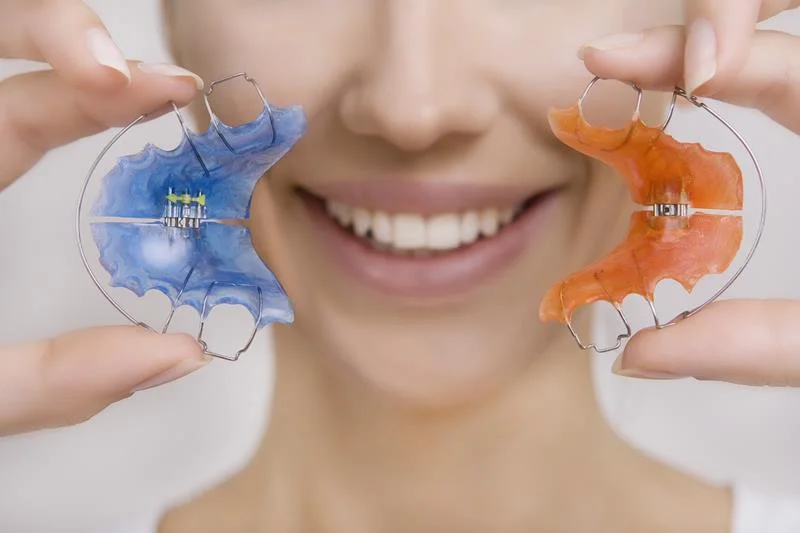
Yes, you must wear a retainer after braces. Without one, teeth shift back toward their pre-treatment positions within 1 to 5 years, undoing the result you just paid for. The 5 things to know:
- Full-time wear for the first 3 to 6 months after braces come off (22+ hours per day)
- Nightly wear for life thereafter, teeth never stop wanting to shift
- Three retainer types: Hawley (wire and acrylic), Essix (clear plastic), or fixed/bonded (permanent wire behind teeth)
- Replace every 5 to 10 years as the plastic wears out, or sooner if it cracks or no longer fits
- If you stop wearing it, expect lower-front crowding within 6 to 12 months, the most common regression pattern
This guide covers exactly why retainers are required, the trade-offs between Hawley, Essix, and fixed retainers, the realistic timeline, what happens if you skip them, and how to care for the retainer to make it last. Dr. Polina Ingberman, DDS at Brace Central in Brooklyn has guided thousands of patients through retention across over a decade of practice.
Why retainers are required after braces (the science of relapse)
Teeth do not stay where braces or Invisalign clear aligners put them on their own. The bone and ligaments around each tooth take 6 to 12 months to remodel and stabilize after active treatment ends. During that window, the teeth are biologically primed to drift back toward their original positions because the surrounding tissues remember the old configuration.
This rebound is called orthodontic relapse, and it is the single biggest reason that finished orthodontic cases regress. Studies have consistently shown that without retention, more than 70% of treated teeth show measurable shifting within 5 years, with lower-front crowding being the most visible pattern. A retainer prevents this shift by holding the new tooth positions in place while the bone and ligaments fully adapt to the new arrangement, and continues to hold them long-term as natural age-related shifting tries to occur.
The 3 types of retainers and how to choose
Retainers fall into three categories. The right choice depends on the case, the patient’s lifestyle, and orthodontist recommendation. Many patients use a combination, for example, a fixed retainer behind the lower front teeth and a removable Essix tray on top.
Hawley retainer (wire + acrylic, classic)
The Hawley retainer is the original removable retainer: a curved wire that crosses the front teeth, anchored in a custom-shaped acrylic plate that fits against the roof of the mouth or floor of the lower jaw. Hawleys are the most durable removable retainer (typically lasting 5 to 10 years), allow the back teeth to settle naturally into their final bite, and can be adjusted by the orthodontist if minor refinements are needed. They are visible from the front because of the wire, which some patients prefer to avoid for cosmetic reasons.
Essix retainer (clear plastic, low profile)
Essix retainers are clear plastic trays that look identical to Invisalign aligner trays. They are nearly invisible when worn, which makes them the most popular removable retainer for adults. The trade-off is durability: Essix retainers typically last 2 to 5 years before the plastic wears, cracks, or warps, so replacement is more frequent. Essix trays also fully cover the back teeth, which prevents some natural bite settling but provides excellent positional control.
Fixed/bonded retainer (permanent wire behind teeth)
A fixed retainer is a thin wire bonded permanently to the inside surface of the lower front teeth (and sometimes the upper). Patients do not have to remember to wear it because it is always in place. Fixed retainers are the most reliable form of retention for the lower-front area, where relapse is most common. The downsides are that flossing requires a threader or water flosser, and the wire occasionally debonds and needs re-bonding. Many orthodontists pair a fixed lower retainer with a removable upper retainer for the strongest combined retention.
How long do you wear a retainer after braces?
The standard retention timeline is:
- Months 0 to 3: Full-time wear (22+ hours per day), removed only for eating and brushing.
- Months 3 to 6: Reduce to nights and parts of the day if the orthodontist confirms stability at follow-up.
- Months 6 to 12: Nights only.
- Year 1+: Nights for life. Teeth never stop wanting to shift, so retention is permanent.
This timeline applies to removable retainers (Hawley, Essix). Fixed retainers stay bonded indefinitely as long as they remain functional. Skipping nights even years after treatment causes gradual relapse, especially in the lower-front area where soft tissue pressure is constant.
What happens if you stop wearing your retainer?
Stopping retainer wear has predictable consequences depending on how long ago braces came off:
- Within 6 months of debonding: Rapid relapse. Visible shifting can occur within 2 to 4 weeks. Lower-front crowding is the first sign.
- 6 to 24 months out: Slower relapse. Most patients see noticeable shifting within 3 to 12 months of stopping retainer wear.
- 2 to 5 years out: Slow but steady age-related shifting. Lower-front crowding still occurs, just over a longer timeframe.
- 5+ years out: Continued slow age-related shift. Patients in their 40s and 50s often present with lower-front crowding even though their teeth were perfectly aligned at the end of teen-age braces.
The good news: limited relapse can often be corrected with a fresh round of Invisalign in 6 to 9 months, followed by stricter retention. Major relapse may require full retreatment with braces.
Braces stabilization: how teeth lock in over time
The technical term for the post-braces locking phase is “stabilization.” During the first year after braces, several biological processes complete:
- Periodontal ligament remodeling. The fibers connecting each tooth to the bone slowly reorient to match the new tooth position. This takes 6 to 12 months.
- Alveolar bone reformation. The bone surrounding each tooth root rebuilds at the new position. Most active remodeling happens in the first 6 months.
- Soft tissue adaptation. The cheeks, lips, and tongue adapt their resting pressure to the new tooth alignment. This is faster, usually 3 months.
Stabilization completes biologically at roughly 12 months. Once it does, the teeth are far less prone to rapid relapse. They still drift slowly with age, which is why nightly retainer wear continues for life. Stabilization is also why orthodontists are firm about full-time wear in the first 6 months: that is when the biology is still settling and the retention work matters most.
Aligners as retainers: when Invisalign trays double up
Patients who finish Invisalign treatment often ask whether the final aligner trays can serve as retainers. The answer is yes for short-term retention, no for long-term. The final trays are made of the same Essix-style plastic as a dedicated Essix retainer, but they were designed to apply movement pressure for 1 to 2 weeks each, not to hold a position for years. Used as retainers, the trays usually last 3 to 6 months before warping or cracking.
The standard approach after Invisalign is to wear the final aligner trays for 3 to 6 months, then transition to a properly molded Essix retainer (or a fixed lower retainer plus a removable upper) for long-term retention. The same applies to patients who finish traditional braces and use clear aligners for refinement, see our guide on the differences between removable orthodontic appliances for more on which retainer fits which case.
Retainer care: cleaning, storage, replacement
Daily cleaning (do this)
Brush the retainer gently with a soft toothbrush and lukewarm water every time you brush your teeth. Hot water warps plastic. Toothpaste is too abrasive for clear plastic and can scratch the surface, leaving microscopic gaps where bacteria collect. Plain water works for daily cleaning. For the retainer’s exterior surface, mild dish soap is fine. Patients who follow our braces and teeth cleaning routine can adapt the same hygiene principles for retainers.
Weekly deep clean
Once a week, soak the retainer in a denture-cleaning tablet or a 1:1 mix of water and white vinegar for 15 minutes. This removes mineral buildup and any bacteria that have accumulated. Rinse thoroughly before putting the retainer back in. Avoid mouthwash soaks (alcohol breaks down the plastic) and avoid boiling water (it warps the retainer permanently).
When to replace your retainer
Replace removable retainers when they crack, warp, no longer fit snugly, or become discolored beyond what cleaning can fix. Hawley retainers typically last 5 to 10 years. Essix retainers last 2 to 5 years. Fixed retainers last indefinitely until the wire debonds or breaks. Bring a worn retainer to your follow-up appointment, the orthodontist can scan for a replacement and confirm the teeth still fit the prescribed shape.
Frequently Asked Questions
Do I really need a retainer after braces?
Yes. Without retention, more than 70% of treated teeth show measurable relapse within 5 years. Retainers are the only proven way to hold orthodontic results long-term, and there is no medical or technical alternative.
How long do I have to wear a retainer after braces?
Full-time for the first 3 to 6 months, then nights only for life. Teeth never stop wanting to shift, so nightly retainer wear is permanent for everyone, regardless of age or how long ago treatment ended.
Can I just wear my retainer at night from day one?
No. The first 3 to 6 months require full-time wear (22+ hours per day) because the bone and ligaments around each tooth are still remodeling. Skipping daytime wear during this period causes rapid relapse before stabilization completes.
What is the difference between Hawley, Essix, and fixed retainers?
Hawley uses wire and acrylic and is the most durable removable option (5 to 10 years). Essix is clear plastic, nearly invisible, but lasts 2 to 5 years. Fixed retainers are permanent wires bonded behind the front teeth, requiring no patient effort but demanding diligent flossing. Many patients use a fixed lower retainer plus a removable upper.
Are retainers necessary if my teeth still look straight?
Yes. Teeth that look straight today can shift visibly within months once retention stops. The bone, ligaments, and soft tissues still want to return to the original configuration even when the teeth currently appear in the right position.
What if I stopped wearing my retainer years ago and my teeth shifted?
Limited relapse (mild lower-front crowding, slight rotation) can usually be corrected with 6 to 9 months of Invisalign followed by stricter retention. Major relapse may require full retreatment. Book a consultation for an honest assessment of your specific case.
Need a replacement retainer or worried about teeth shifting after braces? Book a consultation with Dr. Polina Ingberman, DDS at Brace Central in Brooklyn. We will scan your current bite, recommend the right retention approach, and provide a replacement retainer if needed. Schedule a Brooklyn consultation.
Related guides: do orthodontists file teeth after braces?, when you can eat after getting braces, getting braces with straight-looking teeth, braces with a crown, Invisalign and dental implants, and braces before and after results.
Disclaimer: This article is for informational purposes only and is not a substitute for professional medical advice, diagnosis, or treatment. Always consult with a qualified orthodontist regarding any dental concerns, including retention questions specific to your case.