
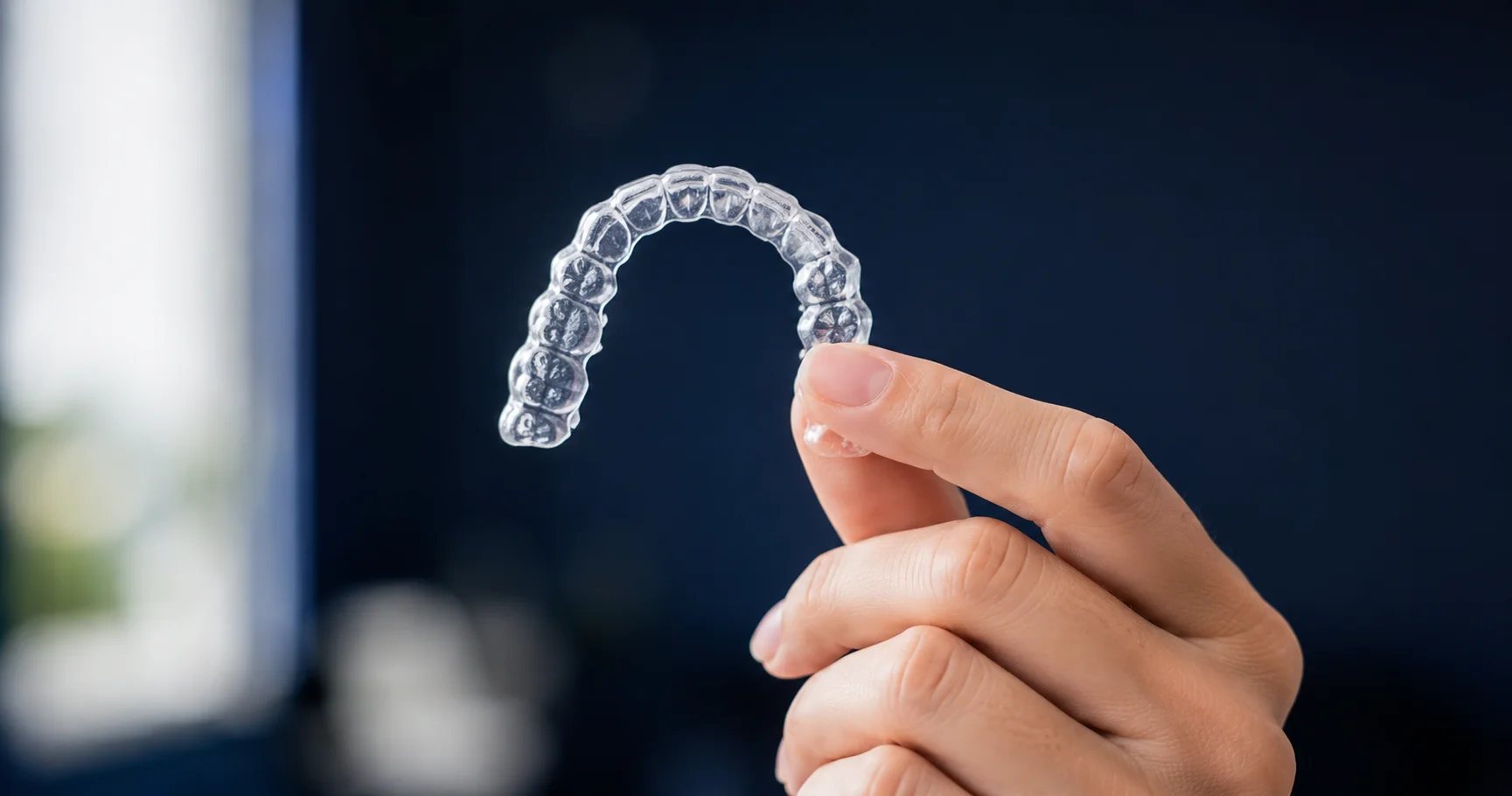
Removable braces are orthodontic devices you can take in and out of your mouth, including Invisalign clear aligners, Hawley appliances, and removable functional appliances for children. They work best for mild to moderate misalignment and rely on you wearing them 20 to 22 hours per day. Whether they are right for you depends on the complexity of your case, your age, and how reliably you can wear them. At Brace Central Orthodontics in Brooklyn, Dr. Polina Ingberman evaluates each patient to recommend the most effective treatment, fixed or removable, during a free consultation.
Removable Braces at a Glance
- ✓ Cost range: varies by case depending on type
- ✓ Wear time required: 20 to 22 hours per day
- ✓ Treatment duration: 6 to 24 months
- ✓ Best for: mild to moderate cases
- ✓ Free consultation at Brace Central Orthodontics
If you have heard the term “removable braces” and wondered exactly what it means, you are not alone. The phrase covers several different orthodontic devices, each with its own purpose, cost, and effectiveness. Below we walk through every type, explain when each one is the right call, and give you a clear sense of what treatment costs in Brooklyn.
What Are Removable Braces?
Removable braces are orthodontic devices that you, the patient, can take out of your mouth. This is the key difference between them and traditional fixed braces, which are bonded to your teeth and cannot be removed until treatment ends.
The term “removable braces” is a bit of a catch all. It includes any orthodontic appliance that comes out for eating, brushing, or cleaning. Patients use the phrase most often to mean clear aligners like Invisalign, but it also covers older Hawley appliances and certain pediatric devices used in early treatment.
The trade off is simple. Removable means more comfort, easier cleaning, and discretion, but it also means treatment success depends on you. If you do not wear the device enough hours each day, your teeth will not move on schedule.
The Four Main Types of Removable Braces
Not every removable orthodontic device is the same. Here are the four most common categories, what each one does, and who they are designed for.
1. Clear Aligners (Invisalign)
Invisalign is the most popular form of removable braces today. The treatment uses a series of clear plastic trays, each one moving your teeth slightly closer to their final position. You switch to a new tray every one to two weeks under your orthodontist’s supervision.
Invisalign treats a wide range of cases, from mild crowding to moderate bite issues. The appliance is nearly invisible, removable for meals and brushing, and comfortable compared to traditional brackets. The catch is that you must wear the trays 20 to 22 hours per day for the treatment to work.
Cost in Brooklyn: varies by case depending on case complexity. Cost reflects full treatment length and complexity.
Treatment time: 6 to 24 months for most patients.
Best for: teens and adults with mild to moderate alignment, spacing, or bite issues who can commit to consistent wear.
2. Hawley Retainers Used as Active Appliances
The Hawley appliance is the classic removable orthodontic device, the pink acrylic plate with a wire that wraps across the front teeth. While most patients know Hawleys as retainers used after braces, they are sometimes used as active treatment for very minor tooth movement or to hold space in a child’s mouth.
A Hawley active appliance can correct mild crowding, close small gaps, or fix a single rotated tooth. For anything more complex, you need a stronger system like Invisalign or fixed braces.
Cost in Brooklyn: varies by case for an active appliance.
Treatment time: 3 to 12 months for minor corrections.
Best for: very mild cases, post treatment touch ups, or maintaining results after fixed braces.
3. Functional Appliances for Children
Functional appliances are removable devices used during a child’s growing years to guide jaw development. The most common are Twin Block, Bionator, and Activator appliances. These are typically used in Phase 1 orthodontic treatment, which often starts between ages 7 and 11.
These appliances do not straighten individual teeth. Instead, they reposition the lower jaw, correct overbites, and create more room as the child’s permanent teeth come in. Phase 1 treatment with a functional appliance is often followed by Phase 2 with traditional braces or Invisalign Teen later in adolescence.
Cost in Brooklyn: varies by case for the appliance and Phase 1 monitoring.
Treatment time: 9 to 18 months of active wear.
Best for: growing children with skeletal or developmental issues, before all permanent teeth have erupted.
4. Removable Expanders
While most palatal expanders are fixed to the upper teeth, some are removable. These appliances widen the upper jaw to correct crossbites, create more space for crowded teeth, or improve the bite. Removable expanders are easier on younger children but rely heavily on consistent wear, which makes them less common than the bonded version.
Cost in Brooklyn: varies by case depending on type.
Treatment time: 3 to 9 months of expansion plus a holding phase.
Best for: children with narrow upper jaws or crossbites, before the palate fuses around age 14.
Are Removable Braces Effective?
Yes, removable braces are highly effective for the cases they are designed to treat. The success rate of Invisalign for appropriate cases is comparable to traditional braces when patients wear their aligners as instructed. Hawley appliances and functional devices have been used successfully for decades when worn consistently.
The honest answer is that effectiveness depends almost entirely on you. A removable appliance only works while it is in your mouth. If your aligners spend hours sitting on your nightstand or in your school backpack, your teeth will not move on schedule and your treatment will take longer.
Cases that involve severe crowding, complex bite problems, impacted teeth, or jaw misalignment usually need fixed braces or a combination approach. During your consultation, your orthodontist evaluates your case and tells you honestly whether a removable system can deliver the result you want.
How Much Do Removable Braces Cost in Brooklyn?
Cost depends on which type of removable braces you need and how complex your case is. Here is a quick reference for Brooklyn patients.
| Type | Brooklyn Cost | Best For |
|---|---|---|
| Invisalign | varies by case | Teens and adults, mild to moderate cases |
| Hawley active appliance | varies by case | Minor corrections, touch ups |
| Functional appliance | varies by case | Growing children, Phase 1 |
| Removable expander | varies by case | Children with narrow jaws or crossbites |
Most insurance plans that cover orthodontic treatment cover removable braces the same way they cover fixed braces. Brace Central Orthodontics offers interest-free payment plans so cost is rarely a barrier to starting treatment.
Removable vs Fixed Braces: Which Is Right for You?
Both options can deliver an excellent result. The right choice depends on the specifics of your case, your daily habits, and what matters most to you about treatment.
| Factor | Removable Braces | Fixed Braces |
|---|---|---|
| Visibility | Nearly invisible | Visible, with metal or ceramic options |
| Eating | No food restrictions, take out to eat | Avoid hard, sticky, and chewy foods |
| Cleaning | Easy, brush teeth normally | Requires special tools and technique |
| Compliance dependent | Yes, you must wear them | No, always working |
| Complex case capability | Mild to moderate | Mild to severe, all cases |
| Cost in Brooklyn | varies by case (Invisalign) | varies average |
For a deeper dive, read our detailed Invisalign vs braces comparison.
“Invisalign aligners can be removed multiple times as long as they’re worn for at least 22 hours a day. They can be removed several times for eating and brushing.”
Dr. Polina Ingberman, Invisalign Platinum Provider, Brace Central Orthodontics
Why Brooklyn Patients Choose Brace Central Orthodontics for Removable Braces
When you come to Brace Central Orthodontics for a removable braces consultation, you get more than aligners or an appliance. You get an honest evaluation, an experienced specialist, and a full plan.
- Expertise from our orthodontists. Dr. Polina Ingberman graduated first in her class from NYU College of Dentistry and completed her orthodontic residency at Columbia University. She is an Invisalign Platinum Provider with over 25 years of experience. Dr. Amalya Igityan is board certified by the American Board of Orthodontics.
- Free consultation with personalized recommendations. Some patients walk in expecting Invisalign and leave with a different recommendation that fits their case better. We tell you the truth about what your teeth need.
- Interest free payment plans. Our flexible in office financing spreads treatment cost over manageable monthly payments.
- Insurance assistance. If you have orthodontic coverage, we help you maximize your benefits and handle the paperwork.
- Convenient Brooklyn location. Our office at 2468 Coney Island Avenue in the Gravesend and Sheepshead Bay area is easy to reach by car or public transit, with flexible appointment times.
“My son has had braces for two years already and the experience is really really good. The doctor is the best and the office workers are very nice.”
Recent Google Review
Frequently Asked Questions
Are removable braces as effective as fixed braces?
For mild to moderate cases, yes. Invisalign and other removable systems can deliver excellent results when worn 20 to 22 hours per day. For complex cases involving severe crowding, deep bites, or impacted teeth, fixed braces remain the most reliable option. Your orthodontist evaluates your case and tells you honestly which approach fits.
Can adults use removable braces?
Yes. Adults are the fastest growing group of orthodontic patients in the United States, and most choose removable systems like Invisalign for the discretion they offer in professional settings. Age does not limit treatment as long as your teeth and gums are healthy.
How long does treatment with removable braces take?
Most Invisalign cases take 6 to 18 months. Hawley active appliances and minor corrections often finish in 3 to 12 months. Phase 1 treatment in children with functional appliances usually runs 9 to 18 months, sometimes followed later by Phase 2.
What happens if I do not wear my removable braces enough?
Your teeth will not move on schedule and your treatment will take longer. In some cases, lost time can require new aligners or a different treatment plan. Compliance is the single biggest predictor of success with any removable system.
Are removable braces covered by insurance?
Most plans that include orthodontic coverage cover Invisalign and other removable braces the same way they cover fixed braces. We verify your benefits before you start treatment so you know exactly what your plan pays.
Can I switch from removable to fixed braces if my case turns out to be more complex?
Yes. If your orthodontist determines partway through treatment that fixed braces would deliver a better result, switching is straightforward. We discuss this honestly during your consultation and will recommend the right approach from the start.
Medical Disclaimer: This blog post is for informational purposes only and is not a substitute for professional medical advice, diagnosis, or treatment. Removable braces costs and treatment outcomes vary by individual. Always consult a qualified orthodontist to determine the best treatment for your needs. Schedule a consultation at Brace Central Orthodontics for personalized guidance.