
Medically reviewed by Dr. Polina Ingberman, DDS – Board-Certified Orthodontist | 25+ Years Experience | Last Updated: March 2026
Neither Invisalign nor braces is universally “better” because they serve different needs. Invisalign offers a nearly invisible, removable option that fits easily into your lifestyle, while braces provide powerful, consistent correction for complex cases without relying on patient compliance. The best choice depends on your specific teeth, your daily habits, and what matters most to you.
Both Invisalign and braces can give you a beautiful, straight smile. Understanding how each option works and what it requires will help you make an informed decision with your orthodontist.
How Does Invisalign Work?
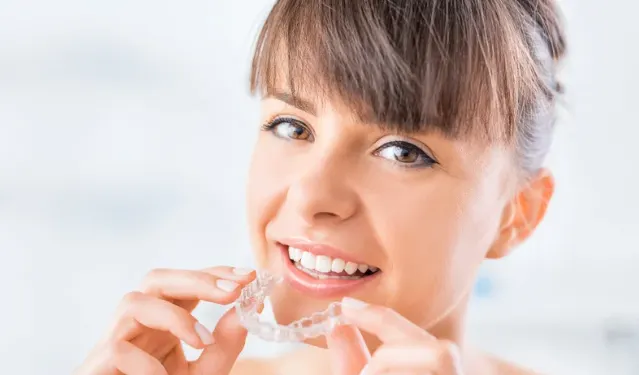
Invisalign uses a series of clear, removable plastic aligners to gradually straighten your teeth. Each set of aligners is custom-made using 3D scanning technology to fit your teeth precisely.
You wear each set of aligners for one to two weeks, then switch to the next set in the series. Each new aligner moves your teeth slightly closer to their final position. Over the course of treatment, your teeth shift into proper alignment.
For Invisalign to work effectively, you must wear the aligners 20 to 22 hours per day. You remove them only for eating, drinking anything other than water, and brushing your teeth. Compliance is essential because the aligners cannot move your teeth if they are not in your mouth.
How Do Braces Work?
Braces use brackets bonded to your teeth and connected by an archwire to move your teeth into alignment. The orthodontist adjusts the wire at regular appointments, and the constant pressure gradually shifts your teeth over time.
Because braces are fixed to your teeth, they work continuously without requiring you to remember to wear them. You visit your orthodontist approximately every four to six weeks for adjustments that keep your teeth moving in the right direction.
Braces can include additional components like rubber bands (elastics) that help correct bite issues by applying pressure between the upper and lower jaws.
Invisalign vs Braces: Appearance
Appearance is often the biggest factor for patients choosing between Invisalign and braces.
Invisalign aligners are made from clear plastic and are nearly invisible when worn. Most people will not notice you are wearing them unless they look closely. This makes Invisalign popular with adults, professionals, and anyone who wants to straighten their teeth discreetly.
Braces are more visible. Traditional metal braces use silver brackets and wires that stand out against your teeth. Ceramic braces offer a less noticeable option with tooth-colored brackets, but they are still more visible than Invisalign. Some patients, especially younger ones, enjoy customizing their braces with colorful elastic bands.
If keeping your orthodontic treatment as invisible as possible is important to you, Invisalign has a clear advantage.
Invisalign vs Braces: Comfort
Both Invisalign and braces cause some discomfort as your teeth move, but the type of discomfort differs.
Invisalign aligners are smooth plastic with no brackets or wires to irritate your cheeks and lips. You may feel pressure when you switch to a new set of aligners, but there are no sharp edges to cause sores in your mouth.
Braces can irritate the inside of your cheeks and lips, especially during the first few weeks. Orthodontic wax helps protect soft tissue from brackets and wires. After an adjustment period, most patients find braces comfortable, though occasional irritation can occur throughout treatment.
Many patients find Invisalign more comfortable overall, particularly because there are no metal components rubbing against the mouth.
Invisalign vs Braces: Eating and Diet
One of the biggest lifestyle differences between Invisalign and braces involves eating.
With Invisalign, you remove your aligners before eating and drinking anything other than water. This means you can eat whatever you want with no restrictions. After eating, you brush your teeth and put your aligners back in.
With braces, you must avoid certain foods that can damage brackets or get stuck in wires. Hard foods like nuts, popcorn, and hard candy can break brackets. Sticky foods like caramel and gum can pull brackets off teeth. You also need to cut hard fruits and vegetables into smaller pieces.
If food freedom is important to you, Invisalign offers more flexibility. However, the need to remove aligners before every meal and brush before replacing them can feel inconvenient, especially when eating out or snacking.
Invisalign vs Braces: Oral Hygiene
Keeping your teeth clean during orthodontic treatment matters for both options, but the approach differs.
With Invisalign, you remove your aligners to brush and floss normally. Your oral hygiene routine stays essentially the same as before treatment. You also need to clean your aligners regularly to prevent buildup and odor.
With braces, brushing and flossing require more effort because you must clean around brackets and under wires. Special tools like floss threaders, interdental brushes, and water flossers help you reach all areas. Proper cleaning takes longer, but it is essential to prevent cavities and staining.
Invisalign makes oral hygiene easier because nothing is attached to your teeth. However, patients who are diligent about cleaning can maintain excellent oral health with braces too.
Invisalign vs Braces: Treatment Time
Treatment time depends more on the complexity of your case than on whether you choose Invisalign or braces.
Invisalign treatment typically takes 6 to 18 months for mild to moderate cases. More complex cases may take longer. Treatment time assumes you wear your aligners the required 20 to 22 hours per day. Poor compliance extends treatment.
Braces treatment typically takes 12 to 24 months, depending on the severity of your orthodontic issues. Because braces work continuously, treatment time is more predictable and does not depend on patient compliance.
For some cases, braces may achieve results faster because they apply more consistent force. For mild cases, Invisalign can be quicker. Your orthodontist can give you an estimated timeline for both options based on your specific needs.
Invisalign vs Braces: Cost
The cost of Invisalign and braces is often similar, though prices vary based on the complexity of your case and your location.
At Brace Central Orthodontics in Brooklyn, Invisalign treatment averages $5,600 and comprehensive braces treatment averages $5,500. The difference is minimal for most cases.
Dental insurance that covers orthodontics typically covers both Invisalign and braces equally. We also offer interest-free payment plans for either option, making treatment affordable regardless of which you choose.
During your consultation, we provide cost estimates for both Invisalign and braces so you can make a decision based on your budget and preferences.
What Can Invisalign Fix?
Invisalign is effective for many orthodontic issues but has some limitations.
Invisalign works well for mild to moderate crowding, gaps between teeth, and some bite issues including mild overbites, underbites, and crossbites. It is an excellent option for patients who had braces as teenagers and experienced some shifting over the years.
Invisalign may not be the best choice for severe crowding, significant bite problems, teeth that need substantial rotation, or cases requiring complex tooth movements. Some patients start with Invisalign and finish with braces if the aligners cannot complete the job.
What Can Braces Fix?
Braces can correct virtually any orthodontic issue, including complex cases that Invisalign cannot handle.
Braces effectively treat severe crowding, significant spacing, all types of bite problems (overbite, underbite, crossbite, open bite), teeth that need major rotation, and cases requiring vertical tooth movement. Braces provide the orthodontist with maximum control over tooth positioning.
If you have a complex case, braces may be your only option or the option most likely to achieve the best result.
Invisalign vs Braces: Patient Compliance
One of the most important differences between Invisalign and braces involves patient responsibility.
Invisalign requires discipline. You must remember to wear your aligners 20 to 22 hours daily, remove them before eating, brush before putting them back in, and switch to new aligners on schedule. Patients who forget to wear their aligners or wear them inconsistently will not get good results.
Braces work automatically because they are fixed to your teeth. You cannot forget to wear them. As long as you attend your adjustment appointments and follow care instructions, your braces will move your teeth as planned.
If you are honest with yourself about your habits, choose accordingly. Patients who know they might struggle with compliance often do better with braces. Patients who are organized and disciplined thrive with Invisalign.
Who Should Choose Invisalign?
Invisalign may be the better choice if:
- Appearance is a top priority and you want nearly invisible treatment
- You have mild to moderate orthodontic issues
- You are disciplined about wearing aligners consistently
- You do not want food restrictions
- You prefer being able to remove your aligners for special occasions
- You work in a professional environment where visible braces feel inappropriate
- You are an adult or mature teen who will be responsible with aligners
Who Should Choose Braces?
Braces may be the better choice if:
- You have complex orthodontic issues requiring maximum control
- You prefer a treatment that works without relying on your compliance
- You are a child or younger teen who may not wear aligners consistently
- You want to personalize your look with colorful bands
- You have severe crowding, significant bite issues, or teeth needing major movement
- You want the most predictable treatment timeline
- Budget is your primary concern and braces cost slightly less for your case
Find Out Which Option Is Right for You
The best way to decide between Invisalign and braces is to consult with an experienced orthodontist who offers both options. At Brace Central Orthodontics, we provide honest recommendations based on your specific case, not a preference for one treatment over another.
Dr. Polina Ingberman is an Invisalign Platinum Provider, meaning she has successfully treated hundreds of patients with Invisalign. She also has over 25 years of experience with traditional braces. Dr. Ingberman graduated first in her class from NYU College of Dentistry, completed her orthodontic residency at Columbia University, and is board-certified by the American Board of Orthodontics. Her expertise in both treatment methods allows her to recommend the option that will give you the best results.
Our Brooklyn office is located at 2468 Coney Island Avenue in the Gravesend and Sheepshead Bay neighborhood. We treat children, teenagers, and adults and offer flexible scheduling including after-school appointments.
Call 718-998-1888 or contact us online to schedule your free consultation. We will evaluate your teeth, discuss your goals, and explain which treatment option will work best for your situation. You will leave with a clear understanding of your options and a personalized cost estimate.
Frequently Asked Questions
Is Invisalign faster than braces?
It depends on your case. For mild orthodontic issues, Invisalign may be faster, with some cases completing in 6 to 12 months. For moderate to complex cases, braces often achieve results in a similar or shorter timeframe because they apply continuous force. Your orthodontist can estimate treatment time for both options based on your specific needs.
Is Invisalign more expensive than braces?
Invisalign and braces typically cost about the same. At Brace Central Orthodontics, Invisalign averages $5,600 and braces average $5,500. Insurance coverage and payment plans are usually the same for both options.
Can I switch from Invisalign to braces if it is not working?
Yes, some patients start with Invisalign and switch to braces if aligners cannot complete the necessary tooth movements. Your orthodontist will monitor your progress and discuss options if adjustments are needed.
Do I still need a retainer after Invisalign?
Yes, you need a retainer after both Invisalign and braces. Retainers hold your teeth in their new positions while the bone and tissue around them stabilize. Without a retainer, teeth can shift back toward their original positions.
Disclaimer
Medically reviewed by Dr. Polina Ingberman, Orthodontist.
This content is for educational purposes only and is not intended as medical advice, diagnosis, or treatment. Please consult a qualified healthcare provider for personalized recommendations.