
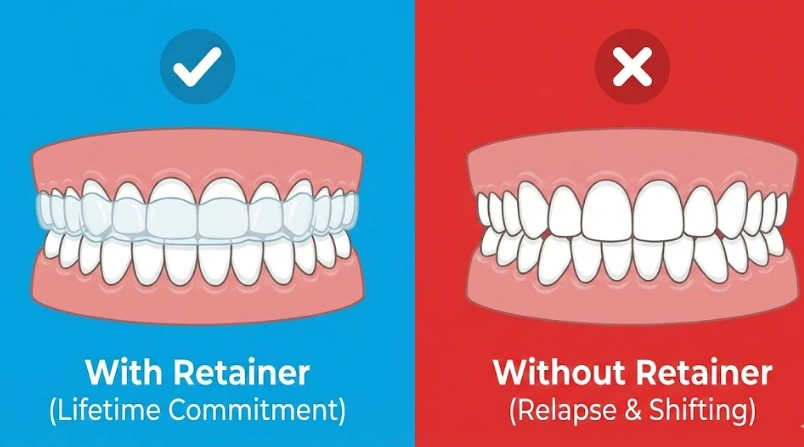
You should wear your retainer full time, about 20 to 22 hours per day, for the first 3 to 6 months after finishing Invisalign treatment. After that, you transition to wearing your retainer only at night. Most orthodontists recommend continuing nighttime retainer wear indefinitely to prevent your teeth from shifting back to their original positions.
Finishing Invisalign is exciting, but it is not the end of your orthodontic journey. The retention phase is just as important as the treatment itself. Without consistent retainer wear, your teeth can start moving within days or weeks of completing treatment.
Retainer Wear Schedule After Invisalign
Here is the typical timeline most orthodontists recommend:
First 3 to 6 months: Full-time wear. Wear your retainer 20 to 22 hours per day, just like you wore your Invisalign aligners. Only remove it for eating, drinking anything besides water, brushing, and flossing.
6 to 12 months: Nighttime wear. Once your orthodontist confirms your teeth are stable, you can switch to wearing your retainer only at night while you sleep.
After 1 year: Long-term maintenance. Continue wearing your retainer every night, or at minimum several nights per week, for the rest of your life.
Your orthodontist may adjust this schedule based on your specific case. Some patients need longer full-time wear, while others can transition to nights sooner. Follow your orthodontist’s recommendations for your situation.
Why Do You Need a Retainer After Invisalign?
During Invisalign treatment, your teeth moved through bone. The bone, gums, and ligaments around your teeth need time to stabilize in their new positions. Without a retainer holding everything in place, your teeth will naturally drift back toward where they started.
This tendency to shift is strongest in the first year after treatment, which is why full-time and then nighttime wear is so important during that period. But teeth can continue to shift throughout your entire life due to normal aging, chewing forces, and changes in your jaw.
A retainer is the only thing preventing this movement. Think of it as insurance for your investment in Invisalign treatment.
What Happens If You Stop Wearing Your Retainer?
If you stop wearing your retainer or wear it less than recommended, your teeth will likely shift. How much and how fast depends on several factors, but some movement is almost guaranteed.
In the first few months: Teeth can shift noticeably within days to weeks if you skip your retainer. The earlier you are in the retention phase, the faster shifting can occur.
After the first year: Shifting tends to happen more slowly, but it still happens. Many people who stopped wearing their retainers in their 20s notice their teeth have moved significantly by their 30s or 40s.
Signs your teeth have shifted: Your retainer feels tight or uncomfortable when you put it on. You notice gaps opening between teeth. Teeth that were straight now look crooked or overlapping. Your bite feels different.
If your retainer no longer fits, do not force it. Contact your orthodontist to assess whether you need a new retainer or if retreatment is necessary.
How Long Until You Only Wear Your Retainer at Night?
Most patients can switch to nighttime-only retainer wear after 3 to 6 months of full-time wear. However, this varies by individual.
Your orthodontist will evaluate your case and let you know when it is safe to reduce wear. Factors that influence this decision include:
How much your teeth moved during Invisalign treatment. How stable your bite is. Whether you had any teeth extracted. Your age (younger patients may need longer full-time wear). Your compliance during treatment.
Do not reduce your retainer wear on your own. Wait for your orthodontist to give you the green light.
Do You Have to Wear a Retainer Forever?
Yes, you should plan to wear your retainer at night for the rest of your life. This is the standard recommendation across all types of orthodontic treatment, not just Invisalign.
Teeth never stop being capable of movement. Natural aging, bone changes, chewing forces, and habits like grinding can all cause shifting over time. The only way to maintain your results permanently is to keep wearing your retainer.
The good news is that nighttime wear becomes second nature. After a while, most patients feel strange going to bed without their retainer. It takes just seconds to put in and becomes as automatic as brushing your teeth.
Types of Retainers After Invisalign
There are several retainer options after Invisalign:
Clear plastic retainers (Essix or Vivera). These look similar to Invisalign aligners. They are removable, nearly invisible, and fit snugly over your teeth. Vivera retainers are made by Invisalign specifically for retention and tend to be more durable than generic clear retainers.
Hawley retainers. These have a wire across the front of your teeth and an acrylic piece that rests against the roof of your mouth or behind your lower teeth. They are adjustable and durable but more visible than clear retainers.
Permanent (bonded) retainers. A thin wire is bonded to the back of your front teeth, usually the lower six. This type stays in your mouth 24/7 and requires no daily compliance. Many orthodontists recommend a permanent retainer on the lower teeth combined with a removable retainer on the upper teeth.
Your orthodontist will recommend the best type based on your case, lifestyle, and preferences.
Tips for Successful Retainer Wear
Keep your retainer case with you. Always have your case available so you have a safe place to store your retainer when eating.
Set a reminder. If you tend to forget, set a nightly phone alarm to remind you to put in your retainer before bed.
Clean your retainer daily. Rinse it every time you remove it and brush it gently with a soft toothbrush. Soak it in retainer cleaner or denture tablets regularly.
Replace when needed. Clear retainers typically last 1 to 3 years with daily use. When yours becomes worn, cracked, or no longer fits snugly, get a replacement.
Bring your retainer to dental appointments. Your dentist or orthodontist can check that it still fits properly and is in good condition.
What If Your Retainer No Longer Fits?
If you have not worn your retainer for a while and it no longer fits, do not force it onto your teeth. Forcing an ill-fitting retainer can damage your teeth or the retainer itself.
Instead, contact your orthodontist. They can evaluate how much your teeth have shifted and recommend next steps:
Minor shifting: A new retainer may be able to gently guide your teeth back if the movement is small.
Moderate shifting: You may need a short round of refinement aligners to correct the movement before getting a new retainer.
Significant shifting: More extensive retreatment may be necessary.
The longer you wait to address shifting, the more complicated and expensive the fix becomes. If your retainer stops fitting, act quickly.
Why Brooklyn Patients Choose Brace Central Orthodontics
At Brace Central Orthodontics, we guide you through every phase of treatment, including retention.
Clear retainer instructions. We provide a specific wear schedule tailored to your case and make sure you understand exactly what is expected. You will never be confused about how long or how often to wear your retainer.
Quality retainer options. We offer Vivera retainers, the official Invisalign retention system, as well as other retainer types depending on your needs. Dr. Polina Ingberman will recommend the best option for your situation.
Ongoing support. If your retainer breaks, gets lost, or stops fitting, we are here to help. We can quickly replace retainers and evaluate any shifting.
Expert orthodontic care. With over 25 years of experience and training from Columbia University, Dr. Ingberman has helped hundreds of patients maintain their results after Invisalign treatment.
Convenient Brooklyn location. Our office at 2468 Coney Island Avenue in Gravesend and Sheepshead Bay makes it easy to come in for retainer checks and replacements.
Frequently Asked Questions
How long do I wear my retainer after Invisalign?
Wear your retainer full time (20 to 22 hours per day) for the first 3 to 6 months, then switch to nighttime only. Plan to wear it at night indefinitely.
Can I stop wearing my retainer after a few years?
No. Teeth can shift at any age. Stopping retainer wear, even years after treatment, puts your results at risk.
What happens if I miss a night of wearing my retainer?
One night is unlikely to cause significant shifting. However, if your retainer feels tight the next time you put it in, that is a sign your teeth moved slightly. Resume consistent wear immediately.
How do I know when to switch to nighttime only?
Your orthodontist will tell you when it is safe to reduce wear based on how stable your teeth are. Do not make this decision on your own.
Is a permanent retainer better than a removable one?
Both have pros and cons. Permanent retainers require no daily compliance but need careful cleaning. Many patients use both: a permanent retainer on the lower teeth and a removable retainer on the upper teeth.
Disclaimer
Medically reviewed by Dr. Polina Ingberman, Orthodontist.
This content is for educational purposes only and is not intended as medical advice, diagnosis, or treatment. Please consult a qualified healthcare provider for personalized recommendations.