
Medically reviewed by Dr. Polina Ingberman, DDS – Board-Certified Orthodontist | 25+ Years Experience | Last Updated: March 2026
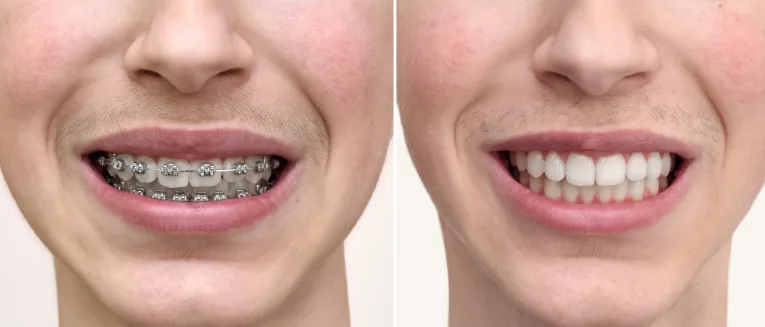
Yes, braces are one of the most effective treatments for correcting an overbite. Braces use brackets, wires, and often rubber bands to gradually shift your teeth and jaw into proper alignment. Most overbites can be fully corrected with braces alone, though severe cases involving the jaw bone may require additional treatment.
If you or your child has an overbite, braces can help. Treatment typically takes 12 to 24 months depending on the severity of the overbite and any other orthodontic issues that need correction. This guide explains what an overbite is, how braces fix it, and what to expect during treatment.
What Is an Overbite?
An overbite occurs when your upper front teeth overlap your lower front teeth more than they should. Some overlap is normal and healthy, but when the overlap becomes excessive, it is considered an overbite that may need orthodontic treatment.
Orthodontists classify overbites into two main types. A dental overbite means the teeth themselves are positioned incorrectly. A skeletal overbite means the jaw bones are misaligned, causing the teeth to overlap. Many patients have a combination of both.
You may also hear the term overjet, which is sometimes confused with overbite. An overbite refers to vertical overlap where the top teeth cover the bottom teeth. An overjet refers to horizontal protrusion where the top teeth stick out in front of the bottom teeth. Both conditions can be corrected with braces.
How Do Braces Fix an Overbite?
Braces correct an overbite by applying constant, gentle pressure to move teeth and influence jaw positioning over time. The process works in stages.
During the first stage, the archwire connected to your brackets works to straighten and align your teeth. This creates a solid foundation for correcting the bite.
In the second stage, rubber bands called elastics are often added to your braces. These small bands connect from brackets on your upper teeth to brackets on your lower teeth. Wearing the elastics as directed applies pressure that gradually shifts your jaw into better alignment. The specific placement of the bands depends on the type and severity of your overbite.
The final stage involves wearing a retainer after your braces come off. The retainer keeps your teeth in their new positions while the bone and gum tissue stabilize around them.
Throughout treatment, your orthodontist monitors your progress and makes adjustments to keep your teeth moving in the right direction. Regular appointments, typically every four to six weeks, allow for these adjustments.
What Types of Overbites Can Braces Fix?
Braces can correct most types of overbites, though the approach may vary depending on the cause and severity.
Dental overbites respond very well to braces. When the overbite is caused by teeth that erupted in the wrong position, braces can move those teeth into proper alignment. This type of overbite is often fully corrected with braces alone.
Mild to moderate skeletal overbites can also be improved significantly with braces, especially when treatment begins during childhood or adolescence while the jaw is still growing. Braces combined with elastics can guide jaw growth and improve the bite relationship.
Severe skeletal overbites in adults may require a combination of braces and jaw surgery. When the jaw bones are significantly misaligned and have stopped growing, braces alone cannot reposition the bone. In these cases, an oral surgeon works with your orthodontist to achieve the best results.
During your consultation, your orthodontist will take X-rays and examine your bite to determine what type of overbite you have and recommend the most effective treatment approach.
How Long Does It Take Braces to Fix an Overbite?
The time needed to fix an overbite with braces depends on the severity of the overbite and whether other orthodontic issues need correction at the same time.
For mild overbites, treatment may take 12 to 18 months. Moderate overbites typically require 18 to 24 months. Severe overbites or cases that also involve significant crowding, spacing, or other bite issues may take two years or longer.
Compliance with your orthodontist’s instructions plays a major role in treatment time. If you are prescribed rubber bands, wearing them consistently as directed is essential. Patients who skip wearing their elastics or only wear them part-time often experience longer treatment times.
At Brace Central Orthodontics, the typical duration of orthodontic treatment is 12 to 24 months. Your orthodontist will give you a more specific estimate based on your individual case during your consultation.
Do You Need Rubber Bands to Fix an Overbite?
Rubber bands, also called elastics, are a common part of overbite correction. These small bands hook onto brackets on your upper and lower teeth and apply pressure to help shift your jaw alignment.
Your orthodontist will show you exactly how to place the rubber bands and how long to wear them each day. Most patients need to wear elastics full-time, removing them only for eating and brushing. Wearing your rubber bands consistently is one of the most important things you can do to ensure your treatment stays on track.
Some patients find rubber bands uncomfortable at first, but most adjust within a few days. Skipping your elastics or wearing them inconsistently can extend your treatment time significantly, so it is important to follow your orthodontist’s instructions.
Not every overbite case requires rubber bands. Mild overbites caused primarily by tooth position may be corrected with the archwire alone. Your orthodontist will let you know if elastics are part of your treatment plan.
Can Invisalign Fix an Overbite?
Invisalign can correct mild to moderate overbites using clear removable aligners instead of brackets and wires. For patients who prefer a nearly invisible treatment option, Invisalign may be a good choice.
However, braces are often more effective for moderate to severe overbites, particularly those involving significant jaw repositioning. The fixed brackets and elastics used with braces provide more precise control over tooth and jaw movement.
At Brace Central Orthodontics, Dr. Ingberman is an Invisalign Platinum Provider and can evaluate whether Invisalign is a good option for your overbite. During your consultation, she will explain which treatment will give you the best results based on your specific case.
What Happens If You Do Not Fix an Overbite?
Leaving an overbite untreated can lead to several problems over time.
Tooth wear and damage occur when teeth do not come together properly. The upper and lower teeth may grind against each other in ways that cause uneven wear, chipping, or cracking.
Jaw pain and TMJ issues can develop when the jaw is misaligned. The temporomandibular joint connects your jaw to your skull, and an imbalanced bite puts extra stress on this joint. Symptoms may include jaw pain, clicking or popping sounds, headaches, and difficulty opening or closing your mouth.
Difficulty chewing is common with significant overbites. When your teeth do not align correctly, biting and chewing food becomes less efficient.
Speech difficulties may occur when severe overbites affect tongue placement and airflow during speech.
Increased risk of dental injury exists because protruding upper teeth are more exposed and more likely to be chipped or knocked out during accidents or sports.
Self-consciousness about the appearance of your smile can affect confidence in social and professional situations.
Correcting an overbite is not just about aesthetics. Proper bite alignment supports long-term oral health and overall comfort.
Overbite Correction for Children vs Adults
Both children and adults can have their overbites corrected with braces, though there are some differences in treatment.
Children and teenagers benefit from having jaws that are still growing. Braces and elastics can guide jaw development and achieve results that might require surgery in an adult. The American Association of Orthodontists recommends children have their first orthodontic evaluation by age 7, which allows the orthodontist to monitor jaw growth and recommend the best time to begin treatment.
Adults can absolutely fix an overbite with braces. Treatment may take slightly longer because the jaw bones are fully developed, but excellent results are still achievable. For adults with severe skeletal overbites, a combination of braces and jaw surgery may be recommended.
There is no age limit for overbite correction. Whether you are 12 or 52, braces can improve your bite and your smile.
Fix Your Overbite at Brace Central Orthodontics
If you are concerned about an overbite, the first step is a professional evaluation. At Brace Central Orthodontics, we offer complimentary consultations to assess your bite, discuss your treatment options, and answer your questions.
Dr. Polina Ingberman has over 25 years of experience correcting overbites and other bite issues. She graduated first in her class from NYU College of Dentistry, completed her orthodontic residency at Columbia University, and is board-certified by the American Board of Orthodontics. Dr. Ingberman will evaluate your specific overbite, explain how braces can help, and create a personalized treatment plan.
Our Brooklyn office is located at 2468 Coney Island Avenue in the Gravesend and Sheepshead Bay neighborhood. We treat children, teenagers, and adults and offer flexible scheduling to fit your busy life.
Call 718-998-1888 or contact us online to schedule your free consultation. We will examine your bite, take any necessary X-rays, and provide a clear explanation of your treatment options and timeline.
Frequently Asked Questions
How much does it cost to fix an overbite with braces?
The cost to fix an overbite with braces is similar to the cost of braces for other orthodontic issues. At Brace Central Orthodontics, comprehensive treatment averages $5,500, with interest-free payment plans available. Many dental insurance plans include orthodontic coverage that can help reduce your out-of-pocket cost.
Is fixing an overbite with braces painful?
You may experience some soreness after your braces are placed and after adjustment appointments, but this discomfort is temporary and typically manageable with over-the-counter pain relievers. Rubber bands may cause additional soreness initially as your jaw adjusts to the new pressure. Most patients find any discomfort decreases within a few days.
Can an overbite come back after braces?
An overbite can return if you do not wear your retainer as directed after treatment. Retainers hold your teeth in their new positions while the bone and tissue around them stabilize. Following your orthodontist’s retainer instructions is essential for maintaining your results long-term.
Do I need braces or jaw surgery for my overbite?
Most overbites can be corrected with braces alone. Jaw surgery is typically only necessary for severe skeletal overbites in adults where the jaw bones are significantly misaligned. Your orthodontist will evaluate your specific case and let you know if surgery is recommended.
Disclaimer
Medically reviewed by Dr. Polina Ingberman, Orthodontist.
This content is for educational purposes only and is not intended as medical advice, diagnosis, or treatment. Please consult a qualified healthcare provider for personalized recommendations.