
Medically reviewed by Dr. Polina Ingberman, DDS – Board-Certified Orthodontist | 25+ Years Experience | Last Updated: March 2026
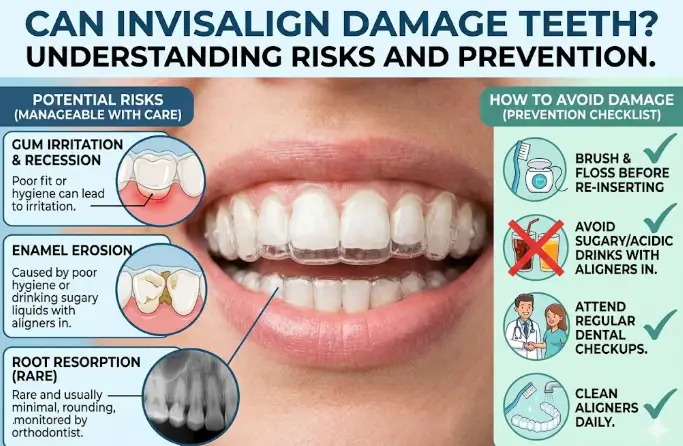
No, Invisalign does not damage teeth when used correctly under the supervision of a qualified orthodontist. Invisalign aligners apply gentle, controlled pressure to gradually move teeth into better alignment. This process is safe and has been used successfully on millions of patients worldwide. However, poor oral hygiene during treatment or wearing aligners without professional oversight can lead to problems like cavities, enamel wear, or gum irritation.
If you are considering Invisalign and worried about potential risks, understanding what can go wrong and how to prevent it will help you feel confident in your decision.
Is Invisalign Safe for Your Teeth?
Yes, Invisalign is considered a safe orthodontic treatment. The aligners are made from medical-grade, BPA-free plastic that has been extensively tested for safety. Invisalign has been FDA-cleared since 1998 and has treated over 14 million patients globally.
The pressure Invisalign applies to teeth is similar to what traditional braces apply, just delivered differently. Both methods work by stimulating bone remodeling, allowing teeth to shift into new positions gradually. When treatment is properly planned and monitored by an orthodontist, Invisalign moves teeth safely without causing damage.
The key to safety is professional supervision. Your orthodontist designs your treatment plan using detailed scans and clinical expertise, ensuring the right amount of force is applied at the right pace. This prevents the problems that can occur when teeth are moved too quickly or without proper planning.
Can Invisalign Cause Cavities or Tooth Decay?
Invisalign itself does not cause cavities, but wearing aligners can increase your risk of decay if you do not maintain good oral hygiene.
When you wear aligners, they cover your teeth and reduce saliva flow around them. Saliva naturally helps wash away bacteria and neutralize acids in your mouth. With aligners in place, bacteria and acids can get trapped against your teeth if you do not clean properly.
The risk increases if you:
Eat or drink sugary or acidic beverages without removing your aligners first. Put your aligners back in without brushing your teeth after eating. Do not clean your aligners regularly, allowing bacteria to build up.
How to prevent cavities during Invisalign:
Always remove aligners before eating or drinking anything besides water. Brush your teeth after every meal before putting aligners back in. Floss daily to remove food particles between teeth. Clean your aligners daily by rinsing and brushing them. Attend regular dental checkups and cleanings during treatment.
With good habits, your risk of cavities during Invisalign is no higher than without aligners.
Can Invisalign Weaken Tooth Enamel?
Invisalign does not weaken enamel when used as directed. The aligners themselves are smooth plastic and do not abrade or scratch tooth surfaces.
However, enamel problems can occur if:
You brush immediately after eating acidic foods. Acid temporarily softens enamel. Brushing right away can wear it down. Wait 30 minutes after eating acidic foods before brushing.
You use abrasive toothpaste on your aligners. Some whitening toothpastes are too abrasive and can scratch aligners, creating rough surfaces. Use a non-abrasive toothpaste or clear soap to clean aligners.
You clench or grind your teeth. Grinding puts extra pressure on teeth and aligners. If you grind at night, let your orthodontist know so they can monitor for any issues.
The plastic aligners actually provide a barrier that can protect enamel from grinding damage during treatment. Many patients find their aligners act as a nightguard while they sleep.
Can Invisalign Cause Root Damage?
When Invisalign treatment is properly planned and monitored, it does not damage tooth roots. However, moving teeth too quickly or with too much force can potentially cause root resorption, a condition where the root becomes slightly shorter.
Root resorption can occur with any type of orthodontic treatment, including traditional braces. It is typically minor and does not affect the health or stability of teeth. Severe resorption is rare and usually only happens when treatment is not properly supervised.
How orthodontists prevent root damage:
Using precise digital planning to calculate appropriate force levels. Scheduling regular checkups to monitor tooth movement and root health. Adjusting treatment if any concerns arise.
This is one of the reasons professional supervision matters. An orthodontist monitors your progress throughout treatment and can make adjustments to protect your teeth.
Can Invisalign Cause Gum Problems?
Invisalign can cause minor gum irritation in some patients, especially when aligners are new or do not fit perfectly. This is usually temporary and resolves as your mouth adjusts.
More serious gum problems can occur if:
Oral hygiene is neglected. Bacteria buildup under aligners can lead to gum inflammation (gingivitis). Symptoms include red, swollen, or bleeding gums.
Aligners have rough edges. Sometimes aligner edges can irritate gum tissue. Your orthodontist can smooth any sharp spots or provide orthodontic wax for comfort.
You develop gum recession. Moving teeth can occasionally cause gums to recede slightly, exposing more of the tooth root. This is more common in patients who already have thin gum tissue or a history of gum disease.
How to protect your gums during Invisalign:
Brush along the gumline carefully to keep gums healthy. Floss daily to prevent plaque buildup between teeth. Report any persistent gum pain or bleeding to your orthodontist. Keep up with regular dental cleanings during treatment.
Most patients complete Invisalign with healthy gums when they maintain good oral hygiene throughout treatment.
How to Protect Your Teeth During Invisalign Treatment
Follow these guidelines to ensure your teeth stay healthy throughout treatment:
Wear aligners 20 to 22 hours per day. Consistent wear keeps your treatment on track and prevents teeth from shifting unpredictably.
Remove aligners for all food and drinks except water. Never eat with aligners in, and avoid drinking anything sugary, acidic, or colored while wearing them.
Brush teeth after every meal. If you cannot brush, at least rinse your mouth with water before putting aligners back in.
Clean aligners daily. Rinse them every time you remove them and brush them gently with a soft toothbrush. Soak them in cleaning solution regularly.
Attend all scheduled appointments. Your orthodontist monitors your progress and catches any issues early.
Communicate with your orthodontist. If something feels wrong, such as an aligner that does not fit, pain that seems excessive, or any changes in your teeth or gums, let your orthodontist know right away.
Invisalign vs DIY Aligners: A Safety Comparison
One of the biggest risks to teeth comes not from Invisalign itself, but from mail-order aligners that promise teeth straightening without professional supervision.
DIY aligner companies send aligners based on impressions you take at home, with little or no in-person examination by a dentist or orthodontist. This approach carries significant risks:
No comprehensive examination. Issues like cavities, gum disease, or bone loss may not be detected before treatment begins. Moving teeth when these problems exist can make them worse.
No X-rays or detailed imaging. Without proper imaging, there is no way to assess root health, bone structure, or hidden problems.
No professional monitoring. If something goes wrong during treatment, there is no orthodontist checking your progress and making adjustments.
One-size-fits-all treatment plans. DIY aligners often use generic approaches rather than customized plans based on your specific needs.
The American Association of Orthodontists has warned against DIY aligners due to reports of patients experiencing tooth damage, bite problems, and other complications.
Invisalign treatment supervised by a qualified orthodontist includes comprehensive exams, detailed imaging, a customized treatment plan, and regular monitoring. This professional oversight is what makes Invisalign safe.
Why Brooklyn Patients Choose Brace Central Orthodontics for Invisalign
At Brace Central Orthodontics, we prioritize your dental health throughout every stage of Invisalign treatment.
- Thorough initial examination. Before recommending Invisalign, Dr. Polina Ingberman evaluates your teeth, gums, and bone structure to ensure you are a good candidate and identify any issues that need to be addressed first.
- Customized treatment planning. Every treatment plan is designed specifically for your teeth using advanced digital scanning and Dr. Ingberman’s 25+ years of orthodontic expertise.
- Regular progress monitoring. We see you throughout treatment to ensure your teeth are moving safely and your oral health remains excellent.
- Invisalign Platinum Provider. Dr. Ingberman has treated hundreds of Invisalign patients and knows how to achieve great results while protecting your teeth.
- Expert orthodontic care. As a specialist who completed her residency at Columbia University, Dr. Ingberman has the training and experience to handle any complexities that arise during treatment.
- Convenient Brooklyn location. Our office at 2468 Coney Island Avenue in Gravesend and Sheepshead Bay makes it easy to keep up with your appointments.
Frequently Asked Questions
Does Invisalign damage teeth?
No, Invisalign does not damage teeth when used correctly under orthodontist supervision. The aligners apply gentle pressure that safely moves teeth into better alignment.
Can I get cavities from wearing Invisalign?
Invisalign itself does not cause cavities, but poor oral hygiene during treatment can increase your risk. Brush after every meal and clean your aligners daily to prevent decay.
Is Invisalign safer than braces?
Both Invisalign and braces are safe when supervised by a qualified orthodontist. Invisalign may be easier to keep clean because aligners are removable, which can reduce the risk of cavities and gum problems during treatment.
Are mail-order aligners safe?
Mail-order aligners carry more risk because they lack professional supervision. Without an orthodontist monitoring your treatment, problems can go undetected and worsen.
What should I do if Invisalign is causing pain?
Some discomfort is normal, especially with new trays. If pain is severe or persistent, contact your orthodontist to ensure your aligners fit correctly and nothing is wrong.
Disclaimer
Medically reviewed by Dr. Polina Ingberman, Orthodontist.
This content is for educational purposes only and is not intended as medical advice, diagnosis, or treatment. Please consult a qualified healthcare provider for personalized recommendations.