
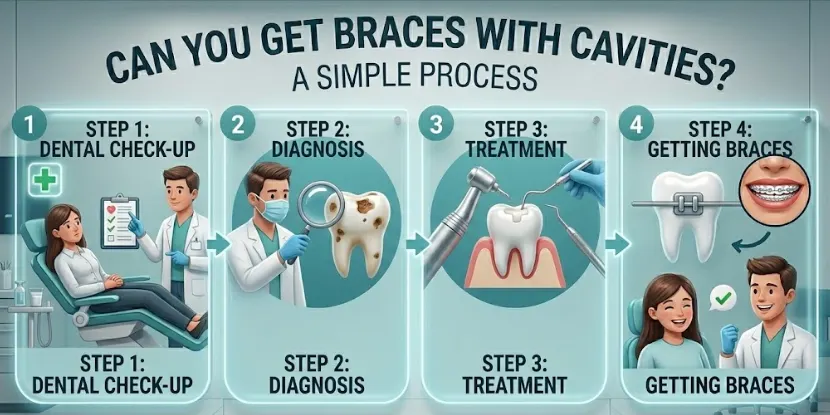
No, you should not get braces if you have untreated cavities. Your orthodontist will require you to have all cavities filled before placing braces on your teeth. Braces make teeth harder to clean, and untreated decay can worsen significantly during orthodontic treatment. Getting your cavities treated first protects your teeth and ensures your braces treatment goes smoothly.
If you have cavities, do not let that stop you from pursuing orthodontic treatment. Simply visit your dentist to have the decay treated, then you can move forward with braces. This guide explains why cavities need attention before braces and what to expect during the process.
Why Do Cavities Need to Be Treated Before Braces?
Cavities are areas of tooth decay caused by bacteria that break down tooth enamel. When left untreated, cavities grow larger and can eventually cause pain, infection, and even tooth loss. Braces create an environment where cavities can worsen quickly for several reasons.
Braces trap food and plaque. Brackets and wires create additional surfaces where food particles and plaque accumulate. Even with excellent brushing, cleaning around braces is more challenging than cleaning bare teeth.
Access to decay becomes difficult. Once brackets are bonded to your teeth, treating a cavity underneath or near the bracket becomes complicated. Your dentist may need to work around the bracket or your orthodontist may need to remove it temporarily.
Decay can spread faster. The combination of trapped plaque and difficult cleaning can accelerate cavity growth during treatment. A small cavity that might have been easy to fill can become a larger problem requiring more extensive treatment.
Weakened teeth may not tolerate braces. Braces apply constant pressure to move teeth. A tooth weakened by decay may not respond well to this pressure and could be at risk of further damage.
What Happens If You Get Braces with Cavities?
If braces are placed over teeth with untreated cavities, several problems can develop.
The cavity will likely worsen during treatment because brushing around brackets is difficult. What started as a small area of decay can grow into a cavity requiring a large filling or even a crown.
Your orthodontist may need to pause treatment to allow cavity repair. If decay becomes significant, brackets may need to be removed so your dentist can properly access and treat the tooth. After the filling, the bracket must be rebonded, which can delay your treatment timeline.
You risk more extensive damage. In severe cases, untreated decay during braces treatment can lead to tooth infections, root canals, or even tooth loss. These complications are entirely preventable by treating cavities before braces.
How Long Before Braces Should Cavities Be Filled?
Your dentist should fill any cavities at least one to two weeks before your braces are placed. This gives the filling material time to fully harden and allows your dentist to check that the filling is holding properly.
If you need more extensive work like a crown or root canal, allow additional time for healing before starting orthodontic treatment. Your dentist and orthodontist can coordinate the timing to ensure you are ready for braces.
In some cases, if a cavity is very small and located where it will not interfere with bracket placement, your orthodontist and dentist may decide treatment can happen during braces. However, this is the exception rather than the rule.
What If You Get a Cavity While Wearing Braces?
Even with good oral hygiene, some patients develop cavities during braces treatment. If this happens, do not panic. Small cavities can often be filled while your braces are in place. Your dentist can work around the brackets to treat the decay.
For larger cavities or cavities located directly under a bracket, the bracket may need to be temporarily removed. After your dentist completes the filling, your orthodontist will rebond the bracket and treatment continues.
The key is catching cavities early. Continue seeing your regular dentist for checkups every six months throughout your orthodontic treatment. Your dentist can spot early decay before it becomes a significant problem.
Do You Need a Dental Checkup Before Braces?
Yes, your orthodontist will require a dental checkup and clearance from your general dentist before placing braces. This checkup ensures your teeth and gums are healthy enough for orthodontic treatment.
During this visit, your dentist will:
- Check for cavities and treat any decay
- Evaluate your gum health and treat any gum disease
- Perform a professional cleaning to remove plaque and tartar
- Take X-rays to identify any hidden decay between teeth
- Provide clearance for orthodontic treatment
If your dentist finds any problems, address them before your braces appointment. Your orthodontist wants to start your treatment with a healthy foundation.
Can You Get Invisalign with Cavities?
Invisalign has the same requirements as traditional braces. You should not begin Invisalign treatment with untreated cavities.
While Invisalign aligners are removable and make brushing easier than braces, cavities still need attention first. Tooth decay can change the shape of your teeth, which affects how your aligners fit. Additionally, you want your teeth healthy before beginning any orthodontic treatment.
The good news is that once cavities are filled, both braces and Invisalign are options for straightening your teeth. Your orthodontist can recommend the best treatment for your specific case.
How to Prevent Cavities During Braces Treatment
Preventing cavities while wearing braces requires extra attention to oral hygiene. Follow these tips to keep your teeth healthy throughout treatment.
Brush after every meal. Food particles trapped around brackets can lead to decay if left in place. Brush within 30 minutes of eating whenever possible.
Use the right tools. An orthodontic toothbrush with V-shaped bristles cleans around brackets more effectively. Interdental brushes help clean between brackets and under wires.
Floss daily. Use floss threaders or orthodontic flossers designed for braces. A water flosser can also help remove food particles from hard-to-reach areas.
Rinse with fluoride mouthwash. Fluoride strengthens enamel and helps prevent decay. Rinse after brushing for added protection.
Limit sugary foods and drinks. Sugar feeds the bacteria that cause cavities. Reduce soda, candy, and other sugary snacks during treatment.
Attend all dental checkups. Continue seeing your regular dentist every six months for professional cleanings and cavity checks.
Your Dentist and Orthodontist Work Together
Your general dentist and orthodontist are partners in your oral health. Before braces, your dentist prepares your teeth by treating any decay and ensuring your gums are healthy. During treatment, your dentist continues monitoring for cavities while your orthodontist focuses on moving your teeth.
This team approach ensures problems are caught early and addressed quickly. If your dentist spots a small cavity during a routine checkup, it can be treated before it becomes a bigger issue.
At Brace Central Orthodontics, we coordinate with your general dentist throughout your treatment. We are happy to communicate directly with your dentist’s office to ensure seamless care.
Start Your Braces Journey at Brace Central Orthodontics
If you have cavities, getting them treated is simply the first step toward your new smile. Once your teeth are healthy, you can move forward with orthodontic treatment.
At Brace Central Orthodontics, we provide comprehensive consultations to evaluate your teeth and determine if you are ready for braces. If we identify any dental concerns, we will recommend you see your dentist before proceeding.
Dr. Polina Ingberman has over 25 years of experience helping patients achieve beautiful, healthy smiles. She graduated first in her class from NYU College of Dentistry, completed her orthodontic residency at Columbia University, and is board-certified by the American Board of Orthodontics.
Our Brooklyn office is located at 2468 Coney Island Avenue in the Gravesend and Sheepshead Bay neighborhood. We offer flexible scheduling to fit your busy life.
Call 718-998-1888 or contact us online to schedule your free consultation. We will evaluate your teeth, discuss any dental work needed, and create a personalized treatment plan for your smile.
Frequently Asked Questions
Can you get braces with a small cavity?
Your orthodontist will typically require all cavities to be filled before placing braces, regardless of size. Even small cavities can grow during treatment when brushing becomes more difficult. It is best to treat all decay before starting braces.
Do braces cause more cavities?
Braces themselves do not cause cavities, but they do make teeth harder to clean. Patients who do not maintain good oral hygiene during treatment are at higher risk for developing cavities. With proper brushing, flossing, and regular dental visits, you can keep your teeth cavity-free throughout treatment.
What if I have a cavity under a bracket?
If a cavity develops directly under a bracket, the bracket may need to be removed temporarily so your dentist can treat the decay. After the filling is complete, your orthodontist will rebond the bracket. This is why preventing cavities during treatment is so important.
How often should I see my dentist while wearing braces?
Continue seeing your dentist every six months for checkups and cleanings while wearing braces. Some orthodontists recommend dental visits every four months during treatment for patients at higher risk of cavities.
Disclaimer
Medically reviewed by Dr. Polina Ingberman, Orthodontist.
This content is for educational purposes only and is not intended as medical advice, diagnosis, or treatment. Please consult a qualified healthcare provider for personalized recommendations.