
Medically reviewed by Dr. Polina Ingberman, DDS – Board-Certified Orthodontist | 25+ Years Experience | Last Updated: March 2026
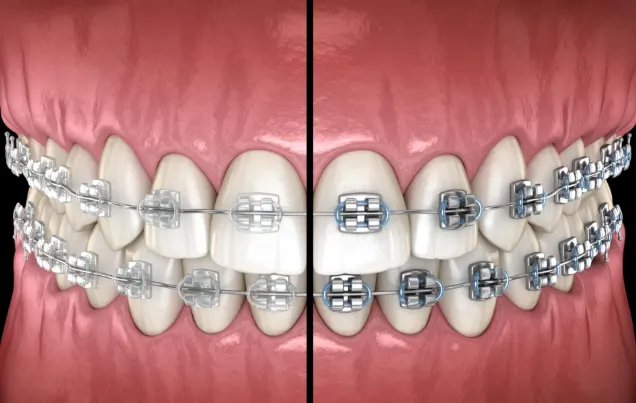
Ceramic braces use clear or tooth-colored brackets that blend with your teeth for a discreet appearance, while metal braces use silver stainless steel brackets that are more visible but typically cost less. Both options straighten teeth effectively using the same bracket-and-wire system, so the choice comes down to your priorities: appearance, budget, durability, and lifestyle.
If you are deciding between ceramic and metal braces, understanding the differences will help you make the right choice for your smile. This guide compares both options so you can discuss your preferences with your orthodontist.
What Are Ceramic Braces?
Ceramic braces work the same way as traditional metal braces but use brackets made from clear or tooth-colored ceramic materials instead of metal. The brackets are bonded to the front of your teeth and connected by an archwire that gradually moves your teeth into proper alignment.
Because the brackets match your natural tooth color, ceramic braces are much less noticeable than metal braces. Some patients also choose tooth-colored or frosted wires to make the braces even more discreet. From a distance, ceramic braces can be difficult to spot, which makes them popular with adults and image-conscious teens.
At Brace Central Orthodontics, we offer Symetri porcelain brackets from Ormco, which provide excellent aesthetics while delivering reliable orthodontic results. These high-quality ceramic brackets resist staining better than older ceramic options and blend seamlessly with most tooth shades.
What Are Metal Braces?
Metal braces are the traditional and most common type of orthodontic braces. They use stainless steel brackets and wires to straighten teeth and correct bite issues. Metal braces have been used successfully for decades and remain highly effective for all types of orthodontic cases.
Modern metal braces are smaller, sleeker, and more comfortable than the bulky brackets of the past. The brackets we use at Brace Central Orthodontics include Damon brackets and Votion brackets, which feature advanced designs that can reduce treatment time and improve comfort.
One advantage unique to metal braces is the ability to personalize your look with colorful elastic bands. At each adjustment appointment, you can choose new colors to express your personality, celebrate holidays, or show school spirit.
How Do Ceramic and Metal Braces Compare in Appearance?
Appearance is the biggest difference between ceramic and metal braces.
Ceramic braces are designed to be discreet. The tooth-colored or clear brackets blend with your enamel, making them much harder to notice in photos, during conversations, and in professional settings. Many adult patients and older teens choose ceramic braces specifically because they want effective treatment without highly visible brackets.
Metal braces are more noticeable because the silver brackets stand out against your teeth. However, some patients embrace the look and enjoy customizing their braces with colorful bands. For younger patients especially, colorful braces can be a fun way to express themselves.
If keeping your braces as invisible as possible is important to you, ceramic braces are the better choice. If you do not mind visible braces or want the option to add color, metal braces work well.
Ceramic Braces vs Metal Braces: Cost Comparison
Metal braces are typically the more affordable option. The cost difference comes from the materials used to make ceramic brackets, which are more expensive to manufacture than stainless steel.
At Brace Central Orthodontics, comprehensive orthodontic treatment averages $5,500, with the exact cost depending on the complexity of your case and the type of braces you choose. Ceramic braces generally cost a few hundred dollars more than metal braces for the same treatment.
Both ceramic and metal braces are usually covered equally by dental insurance plans that include orthodontic benefits. We also offer interest-free payment plans to make either option affordable for your family.
During your free consultation, we will provide a personalized cost estimate for both ceramic and metal braces so you can make an informed decision.
Which Braces Are More Durable?
Metal braces are stronger and more resistant to damage than ceramic braces.
Stainless steel brackets can withstand significant force without breaking. This makes metal braces a good choice for younger children who may be less careful, patients who play contact sports, or anyone concerned about bracket breakage.
Ceramic brackets are more fragile and can chip or crack under pressure. While modern ceramic materials are stronger than earlier versions, they are still more likely to break than metal brackets. If a ceramic bracket breaks, you will need to visit your orthodontist for a repair, which can extend your overall treatment time.
If durability is a priority or you have an active lifestyle, metal braces may be the better choice. If you are careful with your braces and willing to avoid very hard or crunchy foods, ceramic braces hold up well for most patients.
Do Ceramic Braces Take Longer Than Metal Braces?
Treatment time is usually similar for ceramic and metal braces when treating the same orthodontic issues.
Both types of braces use the same mechanics to move teeth. The brackets hold the archwire in place, and the wire applies gentle pressure to shift teeth over time. Whether your brackets are ceramic or metal, the movement process works the same way.
That said, some orthodontists find that metal braces allow for slightly more precise adjustments in complex cases. Ceramic brackets can also be slightly larger, which may create a bit more friction. For most patients, however, these differences are minor and do not significantly affect treatment duration.
The typical treatment time for braces is 12 to 24 months, regardless of whether you choose ceramic or metal brackets. Your specific timeline depends on the complexity of your case, not the bracket material.
Can Ceramic Braces Stain?
The ceramic brackets themselves are stain-resistant and typically stay clear or tooth-colored throughout treatment. However, the elastic bands that hold the wire to the brackets can stain.
Clear or white elastic bands are most likely to pick up color from foods and drinks like coffee, tea, red wine, tomato sauce, curry, and mustard. Within days of your appointment, these bands may turn a yellowish or orange tint.
You can minimize staining by choosing colored bands instead of clear ones, using a straw for dark beverages, rinsing your mouth after eating pigmented foods, and brushing soon after meals. Because you get new elastic bands at every adjustment appointment, any staining is temporary.
If keeping your braces as invisible as possible is your goal, be prepared to pay extra attention to what you eat and drink, especially in the days right after each appointment.
Pros and Cons of Ceramic Braces
Pros:
- Discreet appearance that blends with teeth
- Effective for most orthodontic cases
- Smooth brackets that are comfortable against cheeks and lips
- Ideal for adults and teens concerned about appearance
Cons:
- Higher cost than metal braces
- Brackets can chip or crack more easily
- Elastic bands may stain from certain foods and drinks
- May not be recommended for severe or complex cases
Pros and Cons of Metal Braces
Pros:
- Most affordable braces option
- Extremely durable and resistant to breakage
- Effective for all orthodontic cases, including complex ones
- Fun color options for elastic bands
- Proven track record over decades
Cons:
- Highly visible on teeth
- May cause initial discomfort as cheeks adjust
- Some patients feel self-conscious about appearance
Who Should Choose Ceramic Braces?
Ceramic braces are an excellent choice if:
- Appearance is a top priority for you
- You work in a professional environment where visible braces may feel inappropriate
- You are an adult who wants effective treatment without metal showing
- You are a mature teen who will be careful with your braces
- You are willing to pay slightly more for a discreet option
- You will avoid very hard foods and take care to prevent staining
Who Should Choose Metal Braces?
Metal braces are an excellent choice if:
- Budget is your primary concern
- You have a very active lifestyle or play contact sports
- You are a younger child or teen who may be rough on braces
- You have a complex case that requires maximum control
- You want to personalize your braces with colorful bands
- You prefer a set-it-and-forget-it option without worrying about staining
See Your Options at Brace Central Orthodontics
Choosing between ceramic and metal braces is easier when you can see both options and discuss your goals with an experienced orthodontist. At Brace Central Orthodontics, we offer both ceramic and metal braces and will help you decide which option fits your needs, lifestyle, and budget.
Dr. Polina Ingberman has over 25 years of experience creating beautiful smiles with both ceramic and metal braces. She graduated first in her class from NYU College of Dentistry, completed her orthodontic residency at Columbia University, and is board-certified by the American Board of Orthodontics. Dr. Ingberman will evaluate your teeth, explain your options honestly, and recommend the best approach for your specific case.
Our Brooklyn office is conveniently located at 2468 Coney Island Avenue in the Gravesend and Sheepshead Bay neighborhoods. We offer flexible appointment times, including after-school hours, and treat children, teenagers, and adults.
Call 718-998-1888 or contact us online to schedule your free consultation. We will examine your teeth, discuss whether ceramic or metal braces are right for you, and provide a complete cost breakdown with interest-free payment plan options.
[EMBED GOOGLE BUSINESS PROFILE HERE]
Frequently Asked Questions
Are ceramic braces as effective as metal braces?
Yes, ceramic braces are just as effective as metal braces for most orthodontic cases. Both use the same bracket-and-wire system to move teeth. The main differences are appearance, cost, and durability, not effectiveness.
Can you put colored bands on ceramic braces?
Yes, you can choose colored elastic bands with ceramic braces. However, many patients who choose ceramic braces prefer clear, white, or silver bands to maintain the discreet appearance. Colored bands are always an option if you want to add some personality.
Do ceramic braces hurt more than metal braces?
No, ceramic braces do not hurt more than metal braces. Some patients find ceramic brackets slightly more comfortable because the smooth ceramic surface is gentle on the cheeks and lips. Both types of braces cause some soreness after adjustments, but this is temporary.
How do I clean ceramic braces?
Clean ceramic braces the same way you would clean metal braces. Brush after every meal, use a floss threader or water flosser to clean between teeth and around brackets, and rinse with mouthwash. Pay extra attention to preventing stains on clear elastic bands by avoiding dark foods and drinks.
Disclaimer
Medically reviewed by Dr. Polina Ingberman, Orthodontist.
This content is for educational purposes only and is not intended as medical advice, diagnosis, or treatment. Please consult a qualified healthcare provider for personalized recommendations.