
Reviewed by Dr. Polina Ingberman, DDS – ABO Certified Orthodontist | Invisalign Platinum Provider | 25+ Years Experience | Last Updated: April 2026
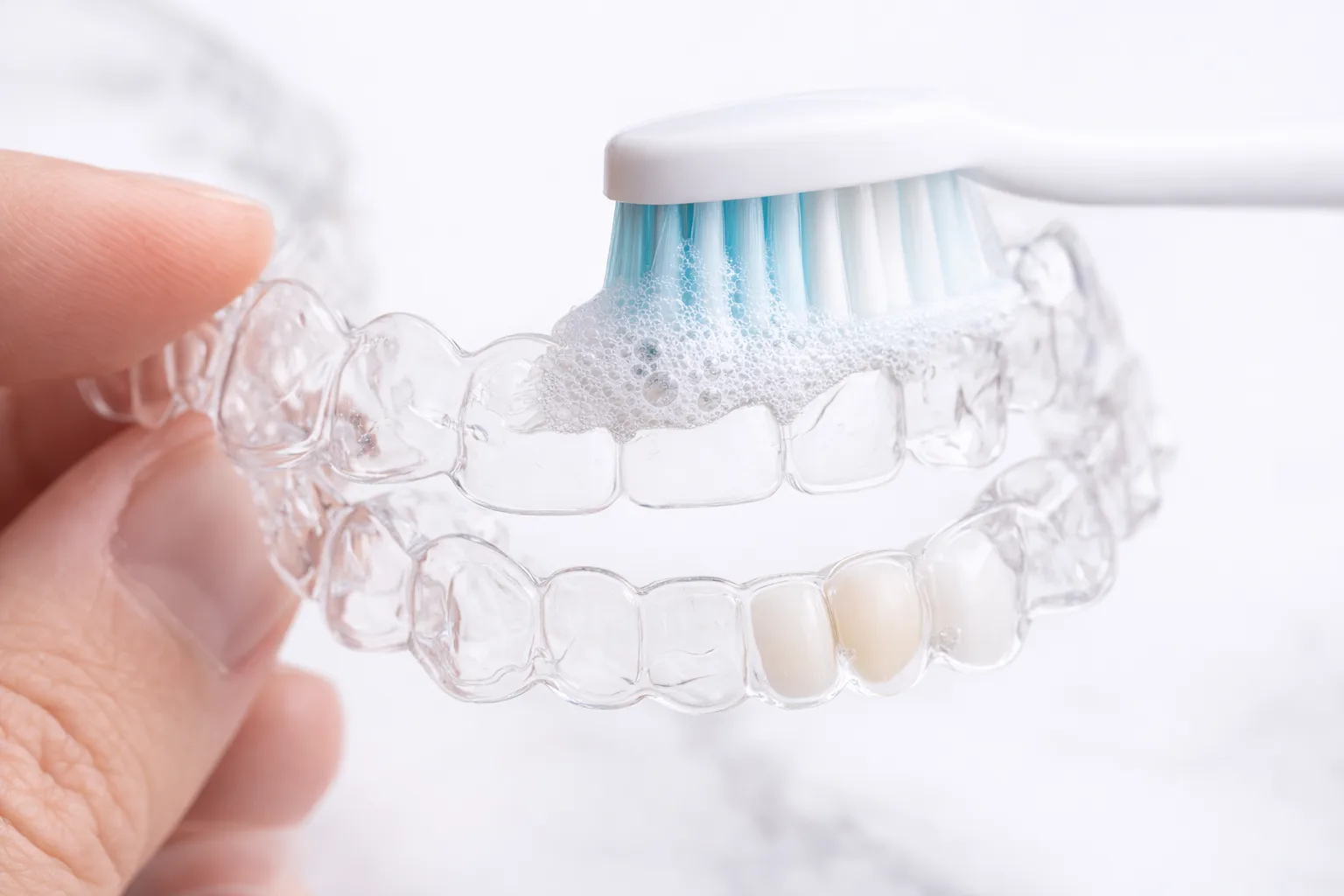
Clean your Invisalign aligners by rinsing them with lukewarm water and gently brushing with a soft toothbrush every time you remove them. For a deeper clean, soak your aligners in Invisalign cleaning crystals or a denture cleaning tablet for 15 to 20 minutes once a day. Never use hot water, regular toothpaste, or colored mouthwash, as these can warp, scratch, or stain your aligners.
Keeping your aligners clean is one of the most important parts of successful Invisalign treatment. Since you wear them for 20 to 22 hours a day, bacteria and plaque build up quickly. A simple daily cleaning routine keeps your aligners clear, fresh, and hygienic throughout your treatment.
Daily Cleaning Routine for Invisalign
The best way to keep your aligners clean is to build a quick routine every time you remove them.
Every time you take out your aligners:
Rinse them under lukewarm water immediately. This removes saliva and loose debris before it has a chance to dry and harden on the plastic.
Morning and night:
Brush your aligners gently with a soft-bristled toothbrush and clear, unscented liquid soap. Use light pressure and small circular motions. Rinse thoroughly to remove all soap residue before putting them back in your mouth.
Once daily:
Soak your aligners in a cleaning solution for 15 to 20 minutes. This kills bacteria and removes buildup that brushing alone cannot reach. The best time to soak is while you eat a meal, since your aligners are already out of your mouth.
This routine takes less than five minutes a day and makes a significant difference in how your aligners look and smell.
Best Products to Clean Invisalign Aligners
Not all cleaning products are safe for Invisalign. Here are the best options:
| Product | How to Use | Frequency |
|---|---|---|
| Invisalign Cleaning Crystals | Dissolve packet in lukewarm water, soak 15 min, rinse | Daily |
| Retainer Brite / denture tablets | Drop tablet in lukewarm water, soak 15-20 min, rinse | Daily |
| Clear antibacterial soap | Small drop on soft toothbrush, brush gently, rinse | Twice daily |
| Hydrogen peroxide (50/50 with water) | Soak 20-30 min, rinse thoroughly | Occasional deep clean |
| White vinegar (1:3 with water) | Soak 15-20 min, rinse well | For mineral buildup |
What to Avoid When Cleaning Invisalign
Some common cleaning methods actually damage aligners. Avoid these mistakes:
Hot water. Heat warps the plastic and ruins the fit of your aligners. Even slightly hot water can cause problems. Always use lukewarm or cool water.
Regular toothpaste. Most toothpastes contain abrasive ingredients designed to scrub stains off teeth. These same abrasives scratch the smooth surface of your aligners, creating tiny grooves where bacteria collect. Scratched aligners also look cloudy instead of clear.
Colored mouthwash. Blue, green, or purple mouthwash can stain your aligners, making them more visible when you wear them. If you want to use mouthwash, choose a clear, alcohol-free formula.
Scented or colored soap. Dyes and fragrances in soap can discolor aligners or leave an unpleasant taste in your mouth.
Denture cleaners with harsh chemicals. Some denture products contain ingredients too strong for Invisalign plastic. Stick to gentle formulas like Retainer Brite or Invisalign brand crystals.
Dishwasher or boiling water. The high heat will permanently warp your aligners, making them unwearable.
Leaving aligners out in open air. When not in your mouth, store aligners in their case. Leaving them out allows bacteria to grow and increases the chance of loss or damage.
How to Fix Common Invisalign Cleaning Problems
My aligners smell bad
Odor usually means bacteria buildup. Soak your aligners in cleaning crystals or a hydrogen peroxide solution for 20 to 30 minutes. Make sure you are brushing your teeth thoroughly before putting aligners back in, since food particles trapped between teeth and aligners cause odor. If the smell persists, you may need to replace that set of aligners.
My aligners turned cloudy or yellow
Cloudiness often comes from scratches caused by abrasive toothpaste or hard-bristled toothbrushes. Unfortunately, scratches cannot be reversed. For your current aligners, continue wearing them as prescribed since cloudiness does not affect function. For future sets, switch to a soft toothbrush and clear soap instead of toothpaste.
Yellowing can result from drinking coffee, tea, or colored beverages while wearing aligners. Always remove aligners before drinking anything except water. A white vinegar soak may help reduce mild discoloration.
My aligners have white buildup
White residue is usually mineral deposits from saliva or hard water. Soak aligners in a solution of equal parts white vinegar and water for 20 minutes to dissolve the buildup. Brush gently after soaking and rinse thoroughly.
I forgot to clean my aligners for a few days
Do a deep clean with cleaning crystals or a hydrogen peroxide soak. Brush gently with soap and a soft toothbrush. Going forward, set a daily reminder on your phone until the cleaning habit becomes automatic.
Tips for Keeping Aligners Fresh Throughout the Day
Maintaining clean aligners is easier when you plan ahead:
Carry a travel kit. Keep a small toothbrush, travel toothpaste, and your aligner case in your bag. This makes it easy to brush your teeth after meals before putting aligners back in.
Rinse before reinserting. If you cannot brush your teeth after eating, at least rinse your mouth with water and rinse your aligners before putting them back in. This is not as good as brushing, but it helps reduce bacteria.
Brush your teeth before wearing aligners. Food particles trapped between your teeth and aligners lead to bacteria growth, bad breath, and increased cavity risk. Brush and floss after every meal when possible.
Use xylitol mints or sugar-free gum. If you need to freshen your breath but cannot brush, xylitol products can help. Remove your aligners first, then enjoy the mint or gum, then brush or rinse before reinserting.
Store aligners properly. Always use the case provided by your orthodontist. Wrapping aligners in napkins leads to accidental disposal. Leaving them exposed invites bacteria growth and damage.
Why Proper Invisalign Cleaning Matters
You wear Invisalign aligners for 20 to 22 hours a day, which means bacteria, plaque, and saliva accumulate constantly. Without proper cleaning:
- Your aligners become visible. Cloudy, stained aligners are more noticeable than clean, clear ones. Proper cleaning keeps them virtually invisible.
- You risk bad breath. Bacteria trapped in dirty aligners causes unpleasant odor that brushing your teeth alone cannot fix.
- Your oral health suffers. Dirty aligners reintroduce bacteria to your teeth every time you wear them, increasing the risk of cavities and gum problems.
- Treatment may take longer. Damaged aligners that no longer fit properly may require replacements, which can delay your progress.
A few minutes of daily cleaning protects both your aligners and your oral health throughout treatment. If you are experiencing discomfort with your aligners, clean aligners also tend to feel better and fit more comfortably.
Why Brooklyn Patients Choose Brace Central Orthodontics for Invisalign
At Brace Central Orthodontics, we teach proper aligner care from day one. When you start Invisalign treatment with us, our team walks you through everything you need to know about cleaning, wearing, and caring for your aligners.
Expert guidance throughout treatment. Dr. Polina Ingberman has over 25 years of orthodontic experience and has treated hundreds of patients with Invisalign. As an Invisalign Platinum Provider, she understands the details that make treatment successful, including proper aligner hygiene.
Support when you need it. If you have questions about cleaning, notice a problem with your aligners, or need a replacement, our team is here to help. We see patients every 6 to 8 weeks throughout treatment to monitor progress and address concerns.
Free consultation to get started. Considering Invisalign? Schedule a complimentary consultation at our Brooklyn office. We evaluate your teeth, explain the treatment process including daily care, and answer all your questions.
Our office is located at 2468 Coney Island Avenue in the Gravesend and Sheepshead Bay area, with flexible scheduling including after-school appointments. With a 4.7-star rating from over 150 Google reviews, Brooklyn families trust us for expert orthodontic care.
Call (718) 998-1888 or contact us online to schedule your free Invisalign consultation.
Frequently Asked Questions
Can I use toothpaste to clean Invisalign?
No. Most toothpastes contain abrasives that scratch aligners, making them cloudy and creating grooves where bacteria grow. Use clear, unscented liquid soap or Invisalign cleaning crystals instead.
Can I use mouthwash to clean Invisalign?
Avoid colored mouthwash, which can stain aligners. If you want to use mouthwash, choose a clear, alcohol-free formula and do not soak aligners in it for extended periods. Cleaning crystals or denture tablets are more effective.
How do I get rid of Invisalign smell?
Soak aligners in Invisalign cleaning crystals or a hydrogen peroxide solution for 20 to 30 minutes. Make sure you brush your teeth thoroughly before reinserting aligners. If odor persists, contact your orthodontist.
Can I clean Invisalign with hydrogen peroxide?
Yes, occasionally. Mix equal parts hydrogen peroxide and lukewarm water and soak aligners for 20 to 30 minutes. Rinse thoroughly before wearing. Do not use this method daily, as frequent use may weaken the plastic.
What happens if I do not clean my Invisalign?
Dirty aligners accumulate bacteria, develop odor, and become cloudy or stained. Wearing dirty aligners increases your risk of cavities and gum disease and makes the aligners more visible when worn.
Medical Disclaimer: This article is for informational purposes only and is not a substitute for professional medical advice, diagnosis, or treatment. Always consult with a qualified healthcare provider regarding any medical concerns.