
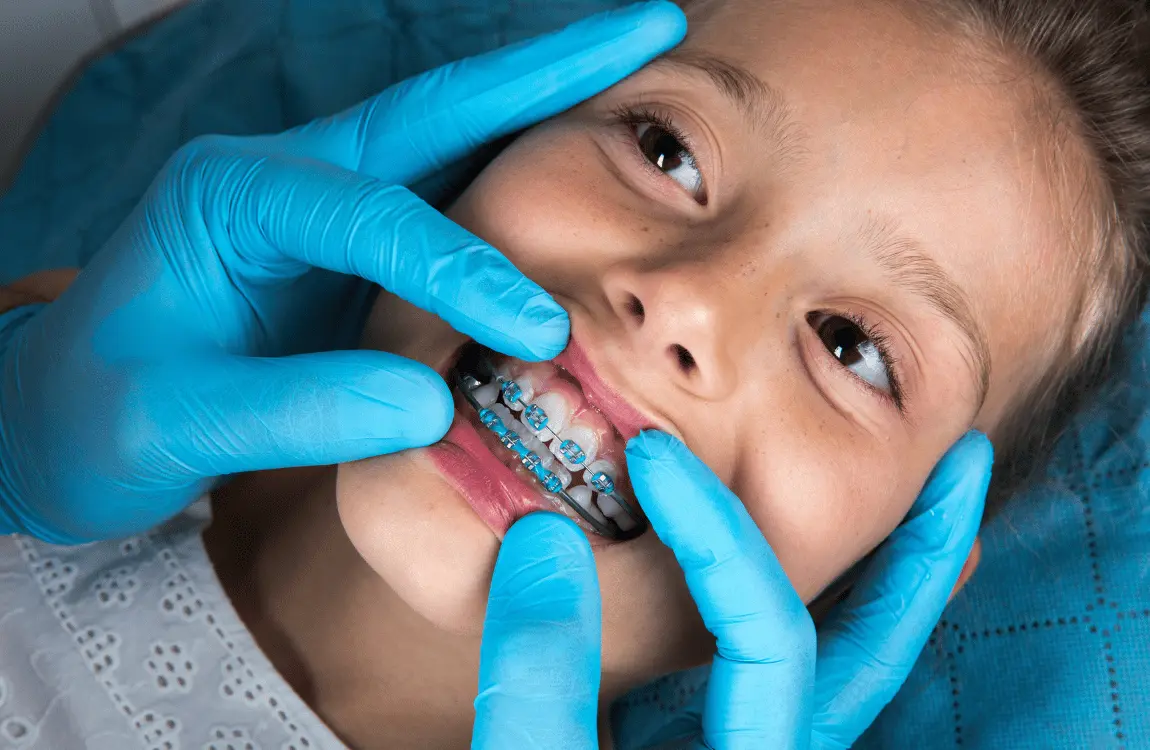
Yes. Some orthodontists file, shave, or reshape teeth after braces. The procedure is called enameloplasty or interproximal reduction (IPR), and it is used to:
- Smooth small, uneven edges left after teeth move into their final position
- Refine where upper and lower teeth meet (the “bite”) for cleaner contact
- Round sharp corners on front teeth for a more uniform appearance
- Create tiny amounts of space without pulling teeth
Filing is not always needed. Most patients leave braces with no reshaping at all. When it is recommended, the procedure is painless, takes 5 to 15 minutes per tooth, and removes only 0.2 to 0.5 mm of enamel, well inside the safe limit.
Why orthodontists file teeth after braces
Filing after orthodontic treatment is a finishing step. Once the brackets come off and the teeth have settled into their planned positions, the orthodontist evaluates whether small refinements would improve how the teeth meet, look, and feel.
1. To smooth uneven enamel edges
Teeth that moved during treatment can finish with slight ridges or chips along the biting edge. A diamond polishing tip removes these in seconds and leaves a uniform edge.
2. To refine the bite (occlusal contact)
If two opposing teeth meet a fraction of a millimeter early, the patient can feel it as a “high spot” when chewing. Light filing on the high contact balances pressure across the whole arch.
3. To round sharp corners on front teeth
Adult patients often have small enamel chips on incisors from years of normal wear. Reshaping the corners makes the front teeth look more even without veneers or bonding.
4. To create micro-space without extraction (IPR)
For mild crowding, removing a sliver of enamel between two teeth creates room for alignment without pulling a tooth. This is the same IPR technique used in Invisalign IPR, applied at the end of treatment instead of the start.
Filing vs shaving vs reshaping: are they the same?
The three terms describe the same procedure, but patients use them differently depending on what their orthodontist or general dentist called it.
- Filing usually refers to smoothing edges and corners with a fine diamond strip or bur.
- Shaving is the casual word patients use; clinicians prefer enameloplasty.
- Reshaping or contouring typically means more deliberate sculpting of the tooth shape, still within the same enamel-only depth limit.
None of the three involves drilling into the inner tooth or numbing. All stay on the outer enamel layer.
How orthodontists file teeth after braces (the procedure)
- Examine and mark. The orthodontist checks the bite with articulating paper, marking spots where teeth meet too early or unevenly.
- Isolate. A small barrier or cotton roll keeps the tongue and cheek out of the way.
- Reduce. A fine diamond bur or abrasive strip is run across the marked area for a few seconds at a time.
- Polish. A rubber polishing cup smooths the surface so plaque has nothing to grip.
- Fluoride. A topical fluoride varnish protects the freshly polished enamel.
The full appointment usually takes 15 to 30 minutes, with no anesthesia and no recovery time.
Does filing teeth after braces hurt?
No. The outer enamel surface has no nerves, so the procedure itself is painless. About 1 in 4 patients feels mild sensitivity to cold for 24 to 48 hours, especially if a high contact was reduced. A fluoride rinse and avoiding very hot or very cold drinks for a day usually resolves it.
How much enamel is removed and is it safe?
Standard limits are well below the thickness of healthy enamel:
- 0.2 to 0.5 mm per tooth surface, per appointment
- Up to 1.5 mm total across all teeth in the arch (the Sheridan IPR limit, the most cited clinical guideline)
- Healthy enamel is 1.5 to 2.5 mm thick on most adult teeth, so removal stays safely within the outer third
Properly performed, enameloplasty removes less enamel than a single year of normal toothbrushing.
Who needs teeth filing after braces, and who does not
Filing is typically recommended for patients who:
- Had small enamel chips on front teeth before braces
- Finish treatment with a slightly uneven biting edge
- Show one or two “high contact” spots on the bite check
- Want a more polished cosmetic finish without bonding or veneers
Filing is usually skipped when:
- The teeth meet evenly and the edges are already uniform
- The enamel is already thin or the patient has a history of sensitivity
- The remaining unevenness is too small to matter cosmetically
When is filing done after braces come off?
Most orthodontists either file the same day the braces come off, or schedule a short follow-up appointment 1 to 4 weeks later, once the gums have settled. A few wait until the 6-month retainer check to confirm the teeth have stayed in place before doing any reshaping.
Aftercare: what to expect for the first 48 hours
- Mild cold sensitivity is normal for 1 to 2 days
- Brush gently with a soft toothbrush; the polished surface is smoother than before but still benefits from how to clean braces and teeth habits during the transition
- Avoid very hot or very cold drinks for the first day
- If you wear a retainer, follow your orthodontist’s instructions on whether to wait or insert it right away
- Soft foods are not required, but follow common sense for the first day, similar to what to eat after braces
- Use any prescribed fluoride rinse for 24 to 48 hours to support remineralization
Help with stain prevention long term is covered in our guide to preventing stains during treatment.
“In my Brooklyn practice I file teeth on roughly one in four patients after braces, and almost always on adults whose front teeth had small enamel chips before treatment. It takes minutes and uses less enamel than a single year of normal toothbrushing.”
Frequently asked questions
Will filing teeth after braces weaken the teeth?
No. The amount of enamel removed (0.2 to 0.5 mm) is far less than the 1.5 to 2.5 mm thickness of healthy enamel. Studies on interproximal reduction show no measurable increase in cavity risk when the surface is properly polished and fluoride is applied.
How soon after braces can teeth be filed?
Often the same day the braces come off, sometimes 1 to 4 weeks later, and occasionally at the 6-month retainer check. Your orthodontist decides based on how the bite settles.
Does insurance cover teeth filing after braces?
When filing is part of orthodontic finishing, it is usually included in the original treatment fee. Standalone cosmetic reshaping later may be an out-of-pocket cost, typically modest because the appointment is short.
Can teeth filing be reversed?
No. Enamel does not grow back, so the change is permanent. This is why orthodontists stay well below the safe-removal limit and only file where there is a clear functional or cosmetic reason.
Will my retainer still fit after filing?
Yes, in almost every case. The amount removed is too small to change retainer fit. If a noticeable space appears, your orthodontist can adjust or replace the retainer at a follow-up. Read more on the role of retainer after filing.
What is the difference between filing teeth and Invisalign IPR?
They are the same technique applied at different stages. Invisalign IPR is done early in treatment to create space for alignment. Filing after braces is done at the end as a finishing refinement. The depth limits and safety profile are identical.
When to talk to your orthodontist about filing
If you have just finished braces and notice an uneven biting edge, a sharp corner on a front tooth, or a “high spot” when you bite down, ask your orthodontist whether enameloplasty would help. For a personalized evaluation in orthodontic treatment in Brooklyn, book a consultation with our team and we will walk you through whether filing is right for your finishing plan.
This article is for informational purposes only and is not a substitute for professional medical advice, diagnosis, or treatment. Always consult with a qualified orthodontist regarding any treatment concerns.