Removable orthodontic appliances are devices you wear in your mouth and take out yourself for eating, brushing, or sports. The 7 main types are clear aligners, retainers, removable palatal expanders, headgear, functional appliances, habit-correction appliances, and removable space maintainers. Each treats a different problem, and the right one depends on your age, the issue being corrected, and how much tooth or jaw movement is needed.
"Removable" means you take it out; "fixed" means only the orthodontist can
A removable orthodontic appliance is any device that moves teeth, holds teeth in place, guides jaw growth, or corrects an oral habit, and that the patient can take in and out at home. Fixed appliances (traditional braces, lingual braces, bonded expanders) are attached to the teeth, and only the orthodontist can put them on or take them off.
The trade-off is simple. Removable appliances are more comfortable and easier to clean, but they only work while they are actually in your mouth. Wear time is the single biggest factor in whether removable treatment succeeds.
The 7 types of removable orthodontic appliances
Each category below is removable because the patient takes it in and out. Several also have fixed versions, noted where it matters.
1. Clear aligners (Invisalign, ClearCorrect) straighten teeth with swappable trays
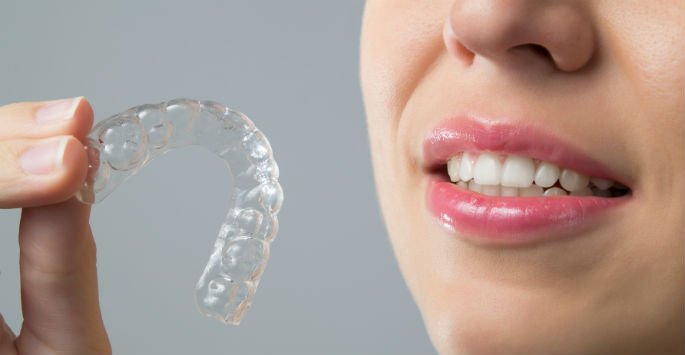
A series of clear plastic trays, custom-made from a digital scan of your teeth. Each tray moves the teeth a small amount, and you switch to the next set every 1 to 2 weeks.
- Best for: mild to moderate crowding, spacing, and mild bite problems. Adults especially value that they are nearly invisible.
- Typical wear time: 20 to 22 hours per day, removed only to eat, to drink anything other than water, and to brush.
Learn more on our Invisalign page.
2. Retainers (Hawley, Essix, bonded) hold teeth after braces come off
A retainer keeps teeth in their new positions once active treatment ends. As Dr. Polina Ingberman explains, "It is essential to wear retainers to prevent relapse (teeth shifting following the orthodontic treatment) and to allow bone and gum remodeling."
Common types:
- Hawley: an acrylic plate with a metal wire across the front teeth. The most adjustable and the most visible.
- Essix: a clear plastic tray that fits over the teeth, similar to an aligner but solid. The most discreet and the least adjustable.
- Bonded (permanent): a thin wire fixed behind the front teeth. It is technically a fixed retainer, and it pairs well with a removable one for the arch that needs the most stability.
Brace Central offers removable clear retainers and permanent bonded retainers. On how long to wear a removable retainer, Dr. Ingberman describes the standard progression: "Immediately after the orthodontic treatment clear removable retainers are worn full time, progressing to night time wear and eventually to wearing retainers 2 to 3 nights per week."
Full overview on the retainers after braces page.
3. Removable palatal expanders widen a narrow upper jaw in children
A removable acrylic plate that gently widens the upper jaw using small springs or a screw. Most expanders are fixed to the upper molars, but removable versions exist for milder cases or for children who cannot tolerate the fixed type.
- Best for: mild crossbite, a narrow upper jaw, or mild crowding in younger patients, usually ages 6 to 14 while the palatal suture is still flexible.
- Typical wear time: around 22 hours per day during active expansion, followed by a retention period.
4. Headgear guides jaw growth with force applied outside the mouth
A device worn outside the mouth that connects to a fixed appliance inside via straps. It applies gentle backward or downward force to influence how the jaws grow.
- Best for: growing children with significant overbite (Class II) or underbite (Class III) patterns. The growth window matters, so headgear is mostly used between ages 9 and 14.
- Typical wear time: 12 to 14 hours per day, almost always at night and after school.
Headgear is far less common today than it was decades ago, replaced in many cases by functional appliances and growth-stage planning, but it still helps in select cases.
5. Functional appliances (Twin Block, Bionator, Frankel) reposition a growing lower jaw
Removable appliances that hold the lower jaw forward to encourage favorable growth in the upper or lower jaw.
- Twin Block: two interlocking acrylic blocks, upper and lower. The most widely used design.
- Bionator: a single-piece appliance that does similar work in a less bulky form.
- Frankel: a tissue-borne appliance that uses the cheek and lip muscles to guide growth.
Best for growing children, typically ages 9 to 12, with an overbite from an underdeveloped lower jaw or other Class II growth patterns. Consistent wear is what makes them work.
6. Habit-correction appliances stop thumb-sucking and tongue-thrusting
Small acrylic plates with wire reminders that block habits that push teeth out of alignment.
- Thumb guards: a plate behind the front teeth that removes the suction needed for thumb-sucking.
- Tongue cribs: a small wire grid that stops the tongue from pressing on the front teeth during swallowing or speech.
Best for children whose oral habits are already moving teeth or who are at risk of developing an open bite.
7. Removable space maintainers hold a gap open for an incoming permanent tooth
A small acrylic plate with a wire that keeps the space open where a baby tooth fell out early, so the permanent tooth has room to come in.
Best for children, roughly ages 3 to 10, who lose a baby tooth more than 6 months before the permanent replacement is due. Without a space maintainer, neighboring teeth drift in and block the permanent tooth from erupting.
Removable vs fixed appliances: which one your case needs
Both classes treat the same problems, but each has its place. The table summarizes the trade-offs.
| Factor | Removable appliances | Fixed appliances (braces) |
|---|---|---|
| Best for | Mild to moderate cases, growth guidance in children, retention, habit correction | Moderate to severe cases, complex bite work, root movement |
| Age range | Ages 6 to 14 for growth guidance; adults for aligners and retainers | Any age; most common ages 11 to 16 |
| Comfort | Comes out for eating, brushing, photos, and sports | Always in place; can irritate cheeks at first |
| Wear-time demand | Very high; results depend on actual hours worn | Low; the appliance works around the clock |
| Visibility | Aligners are nearly invisible; other removables are visible | Visible, though clear ceramic options reduce this |
Who is a candidate for removable orthodontic treatment
Children and teens ages 9 to 14 hit the growth window for jaw-guidance appliances
Between roughly ages 9 and 14 the jaw is still developing, so even small forces can produce meaningful change. That makes it the sweet spot for functional appliances, removable expanders, and headgear. Removable habit appliances are the standard for younger children, around ages 4 to 8. The American Association of Orthodontists recommends a first orthodontic check by age 7.
Adults are the largest group for clear aligners and lifelong retainer wear
Aligners suit adults because they only need to move teeth, since the jaw structure is set, and adults tend to wear them consistently. After any orthodontic treatment, retainer wear is a long-term commitment to keep the result, because teeth naturally shift over a lifetime.
A case needs fixed braces instead when it requires heavy or root-level movement
Severe crowding, a deep overbite, significant jaw misalignment, or any case needing the whole tooth to rotate around its root usually calls for traditional braces or a hybrid plan. Removable appliances cannot generate the sustained, multi-directional force those movements require.
How many hours a day you wear each removable appliance
Typical wear time by type:
- Aligners: 20 to 22 hours per day, out only for meals and brushing
- Active retention after braces: full-time for the first several months
- Long-term retention: nights only, indefinitely
- Removable expanders: around 22 hours per day during active expansion
- Headgear: 12 to 14 hours per day, mostly overnight
- Functional appliances: near full-time; consistent wear decides the outcome
- Habit appliances: close to 24 hours per day until the habit resolves
- Space maintainers: worn until the permanent tooth begins to erupt
Your actual timeline is set at your consultation, since it varies by case.
How to clean and store a removable appliance
- Rinse it under cool water every time it comes out. Hot water warps plastic, so never use it.
- Brush it once a day with a soft toothbrush and a little mild soap or aligner cleaner, and brush your own teeth before putting it back in.
- Store it in its case whenever it is out. A wrapped napkin is a leading way appliances end up in the trash, and dogs find aligners and retainers irresistible.
- Cloudy or smelly? A denture-cleaner tablet weekly clears cloudiness; a daily mild-soap brushing handles odor.
- Sore spot? Stop wearing it and call the office. Do not file or trim the appliance yourself.
- Lost or broken? Call the same day. Teeth can begin shifting within a day or two once you stop wearing it.
"Removable braces" almost always means clear aligners
"Removable braces" is a common search term, but braces (the brackets-and-wires kind) are always fixed. The closest removable equivalent is clear aligner therapy such as Invisalign, which handles many of the same issues traditional braces address. For patients who specifically want a take-out option, aligners are the answer in nearly every case.
Frequently asked questions
Are removable orthodontic appliances as effective as braces?
For mild to moderate cases, yes, especially modern clear aligners. For severe crowding, complex bite problems, or cases needing significant root movement, fixed braces are usually more efficient. The best choice depends on the specific problem, not on which approach is better in general.
How many hours a day do I have to wear a removable appliance?
Most active-treatment appliances need 20 or more hours per day. Retainers are worn full-time at first, then nights only after several months. Functional and habit appliances often need close to 24-hour wear. Headgear is the exception at 12 to 14 hours, almost always overnight.
Can I eat with my removable appliance in?
No. Eating with aligners or retainers in can crack the plastic and traps food against the teeth. Take the appliance out, store it in its case, and rinse it before putting it back in.
Can I chew gum with a retainer?
It depends on the type. As Dr. Ingberman advises, "You should avoid chewing gum with retainers attached to the back of the front teeth. It's possible with removable retainers, but be careful so that the gum does not stick to the appliance."
Will insurance cover removable orthodontic treatment?
Many dental plans that cover braces also cover removable treatment, including clear aligners, though coverage limits and percentages vary widely and many plans cap the orthodontic benefit. Call your insurer or our office to confirm your specific plan.
How much do removable orthodontic appliances cost?
Cost depends on the appliance type and the case complexity. Aligner treatment for adults often runs in a range similar to traditional braces, while retainers after braces are usually part of the original treatment fee. Specific pricing is set at a consultation.
Talk to a Brooklyn orthodontist about your options
If you are weighing orthodontic treatment in Brooklyn and want to know whether a removable appliance fits your case or your child's, our team will walk you through it. Call Brace Central Orthodontics at (718) 998-1888 or book a consultation.
Sources
- American Association of Orthodontists, patient resources and first-visit guidance: aaoinfo.org
- American Dental Association, MouthHealthy orthodontics overview: mouthhealthy.org
- ScienceDirect, removable appliance clinical topic overview: sciencedirect.com
Disclaimer: This information is provided for educational purposes and is not a substitute for professional medical advice, diagnosis, or treatment. Please schedule a consultation with our team to discuss your individual needs.