
For most adults with mild to moderate crowding or spacing, yes. Ceramic brackets move teeth on the same principles as metal ones, and because they're tooth-colored, most people won't spot them at conversational distance. The trade-offs are honest ones: ceramic brackets chip more easily than steel, the elastic ties around them can pick up stain from coffee and red wine, and treatment usually costs a bit more.
Most adults who search this have already made the harder decision. They know they want their teeth straightened. What stops them is the picture in their head of a mouth full of metal in a client meeting.
Will anyone actually notice ceramic braces?
At normal talking distance, most people won't. The brackets are made from a translucent porcelain material shaded to sit against your enamel, so what a coworker sees on a video call reads as your smile.
One honest detail gets skipped in a lot of write-ups: the archwire. The bracket blends in, but a standard archwire is still metal, and it runs across the front of your teeth. It's thin, and it's a long way from the look people picture when they hear the word braces. But it's there. Adults who expect complete invisibility should hear that at the consultation rather than at the bonding appointment.
Brace Central Orthodontics uses Symetri Clear porcelain brackets by Ormco for patients who want the discreet look.

Do ceramic braces work as well as metal braces?
Yes, for the great majority of adult cases. A bracket is an anchor. It holds an archwire, the wire applies steady pressure, and the bone remodels around the tooth as it moves. That mechanism doesn't care whether the anchor is porcelain or steel. Ceramic brackets improve crowding, spacing, and most bite problems the same way metal ones do.
Bracket material is rarely what decides your timeline either. Case complexity and how consistently you follow the plan matter far more. Where metal keeps a real edge is at the demanding end of the range: a severe bite problem that needs heavy force, or a patient who grinds at night or plays contact sports, where a brittle bracket becomes a liability. That's a clinical call, which is why an orthodontist reads your records first and recommends a system second.
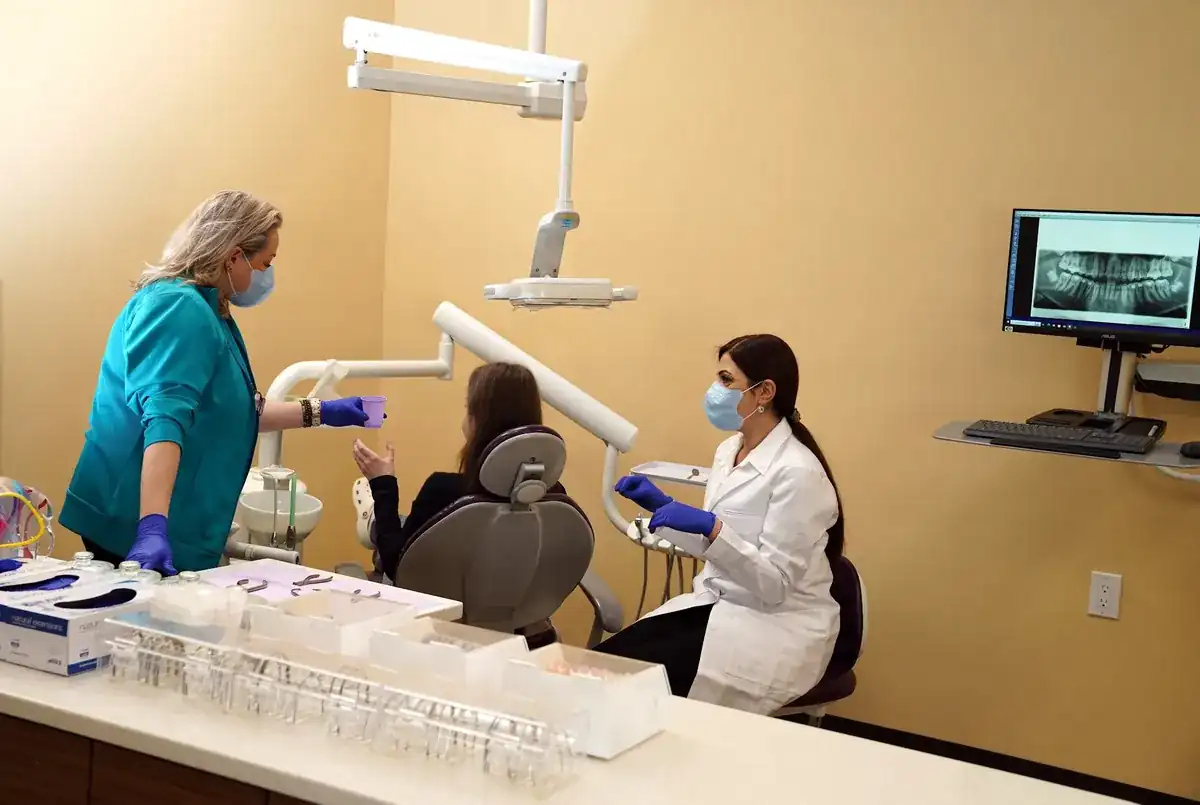
At Brace Central Orthodontics every plan starts with a full set of records, digital impressions, photos, and a radiographic evaluation, then a conversation about what you want out of treatment.
I came in for a consultation about getting braces to fix some crowding in my lower teeth, and she explained the treatment plan clearly without any pressure. I decided to go ahead with metal braces, and the entire process has been smooth so far.
Ava C
What are the real downsides of ceramic braces?
Three, and they're worth knowing before you commit.
They are more fragile. Porcelain is strong, but it chips where stainless steel bends. A broken bracket means an extra visit to rebond it.
The ties stain before the brackets do. This is the detail most people get backwards. The porcelain itself holds its color. The small elastic ligatures that hold the wire are what soak up pigment from coffee, tea, red wine, curry, and tomato sauce. They get replaced at every adjustment, so a stained tie is a short-term annoyance you leave behind at your next visit. If you drink coffee daily, say so at your consultation, because it changes what your orthodontist recommends.
They cost a bit more than metal. The tooth-colored material carries a modest premium at most practices, including this one.
None of these are dealbreakers for a typical adult case. They're the price of the discreet look, and you should weigh them with your eyes open.
Ceramic braces or clear aligners?
This is the fork most adults who dislike metal are actually standing at, and it deserves a straight answer.
Clear aligners are removable and, for most people, harder to notice than any bracket. You take them out to eat, so nothing is off the menu, and there are no ties to stain. The catch is that they only work while they're in your mouth. Compliance is the whole ballgame, and aligners suit some movements better than others.
Ceramic braces are bonded on and work whether or not you remember them. For an adult who suspects they would leave aligners in a napkin at lunch, or whose case needs the control that bonded brackets give, ceramic is often the more realistic path to the same result.
Neither one is universally better. The honest version of this answer depends on your bite and your habits, which is what the consultation is for.
I'm in my mid-30s and was nervous about starting Invisalign, but Dr. Polina made it feel like the easiest decision.
Ellen Bruno
What do clear ceramic braces cost, and will insurance help?
Ceramic braces typically run a bit more than metal, and the final number depends on the complexity of your case rather than the bracket alone. Brace Central Orthodontics quotes the fee for your specific plan at the consultation, which is free, so you can see the real figure before deciding anything. Here is a fuller breakdown of what braces cost in Brooklyn.
Many dental insurance plans include orthodontic benefits, and the amount they cover depends on the plan and the orthodontic problem. Brace Central Orthodontics accepts most major dental insurance plans that include orthodontic benefits and offers interest-free payment plans, and the team can walk you through insurance and payment plans before you commit.
Clear ceramic braces at Brace Central Orthodontics in Brooklyn
Brace Central Orthodontics treats children, teens, and adults in Brooklyn, and adult treatment is a routine part of the day here. The practice works with three bracket systems and matches one to the case: Symetri Clear porcelain brackets by Ormco for a discreet look, Damon self-ligating brackets by Ormco, and Carriere Votion appliances by Henry Schein.
The practice was founded by Dr. Polina Ingberman, DDS, who trained in orthodontics at Columbia and has practiced for a quarter of a century. Dr. Amalya Igityan, DDS, is a board-certified orthodontist and a Diplomate of the American Board of Orthodontics. The team works with patients in English, Russian, and Ukrainian, and treatment time varies by case and is discussed at your consultation.
Friendly and courteous staff made my experience getting adult braces worth it and Dr Polina is amazing. She took her time to form a plan designed for my teeth and oh my goodness I'm so happy with my decision.
Nikisha Brathwaite
To find out whether ceramic brackets suit your case, call (718) 998-1888 for a free consultation, or reach the Brace Central Orthodontics office with your questions.
Frequently asked questions
Do ceramic braces hurt more than metal ones?
Not meaningfully. Soreness comes from teeth moving, and the bracket material has little to do with it. It usually settles within two to three days of placement or an adjustment. Ceramic brackets have a smooth, polished surface, and some patients find them gentle against the lip and cheek.
Can I whiten my teeth while wearing ceramic braces?
Wait until they come off. Whitening gel cannot reach the enamel under a bonded bracket, so you risk uneven color once the brackets are removed. Whitening after treatment is straightforward.
Am I too old for ceramic braces?
Adult orthodontics has grown substantially over the past two decades, and healthy teeth and gums matter far more than your age. Active gum disease or untreated cavities should be resolved before any braces go on, which is one of the things the initial exam checks.
Disclaimer: This information is provided for educational purposes and is not a substitute for professional medical advice, diagnosis, or treatment. Please schedule a consultation with our team to discuss your individual needs.