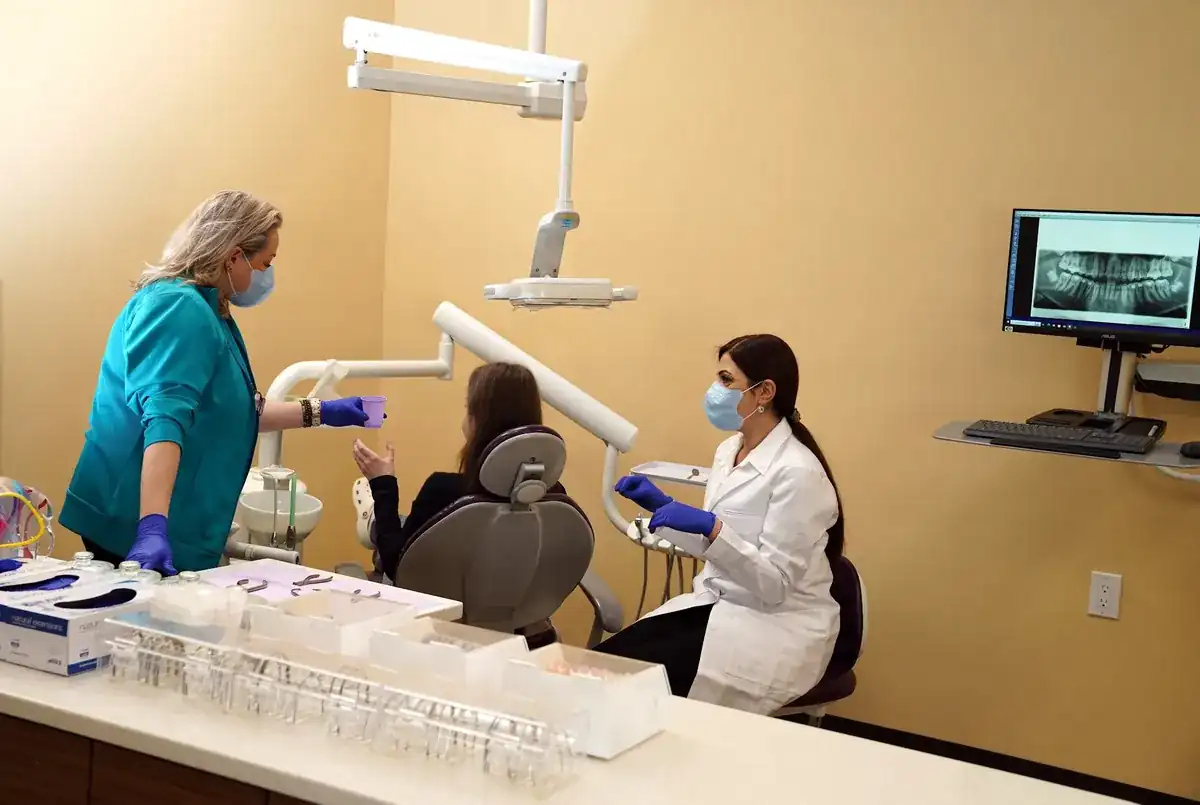
Yes, you can get braces even when your teeth look straight. Straight-looking teeth are not the same as a healthy bite. Orthodontists routinely place braces on patients whose teeth appear aligned but who have problems hidden underneath. The 5 most common reasons are:
- Bite issues (malocclusion) that cause uneven wear and jaw pain
- Jaw misalignment that triggers headaches and TMJ symptoms
- Hidden rotation or crowding not visible from a frontal view
- Bruxism (grinding) that needs a stable bite to control
- Future-proofing before teeth shift with age
That said, no one should get braces purely for cosmetic reasons when the bite is healthy and aligned. The decision belongs to a board-certified orthodontist after a real exam, not a frontal selfie.
This guide explains exactly when straight-looking teeth still benefit from traditional braces or Invisalign clear aligners, what self-checks suggest you should book an evaluation, and what to expect at a consultation with Dr. Polina Ingberman, DDS at Brace Central in Brooklyn.
Yes, you can get braces with straight teeth, here's why
Straight teeth describe how teeth look when you smile. A healthy bite describes how the upper and lower teeth meet, function, and distribute force across the jaw. Those two things are not the same thing, and orthodontists treat the second one.
If your teeth appear straight from the front but the back teeth do not interlock correctly, or your jaw clicks, or you wake up with a sore face, an orthodontist may still recommend braces. The cosmetic appearance was never the full picture.
5 reasons an orthodontist might recommend braces anyway
1. Hidden bite problems (overbite, underbite, crossbite, open bite)
Bite problems can exist behind a straight smile. An overbite means the upper front teeth cover too much of the lower; an underbite means the lower teeth sit ahead of the upper; a crossbite means some upper teeth sit inside the lower when biting down; an open bite means the front teeth do not touch even when the back teeth are closed. Any of these can cause uneven enamel wear, chipped teeth, gum recession, and chewing inefficiency, even when the front teeth themselves look well-aligned.
2. Jaw misalignment and TMJ pain
The temporomandibular joint connects your lower jaw to your skull. When the bite forces the jaw out of its natural resting position, the joint is loaded unevenly day and night. Common symptoms include morning jaw soreness, clicking or popping sounds when chewing, headaches behind the temples, and ear fullness. Braces or aligners can reposition teeth so the jaw closes correctly, taking strain off the joint.
3. Crowding or rotation you cannot see from the front
Front teeth often hide rotation or crowding in the back of the mouth. A canine that has slipped slightly behind the arch, a premolar tipped inward, or upper molars rotated a few degrees can all create hygiene problems and bite imbalance without changing the front-on smile. These cases are common in adults whose third molars erupted late.
4. Teeth grinding (bruxism)
Bruxism is rarely a habit problem alone; it is often the jaw searching for a stable bite position it cannot find. Patients grind to wear teeth into a more comfortable contact pattern. Orthodontic treatment that delivers a stable, evenly distributed bite frequently reduces grinding and the headaches, tooth fractures, and worn-down enamel that come with it.
5. Age-related shifting and future stability
Teeth shift slowly throughout adult life, especially after wisdom teeth erupt or after long-term retainer wear stops. Adults whose teeth were once straight often notice lower-front crowding in their 30s and 40s. A short course of braces or clear aligners can correct early shifting before it becomes severe, and a permanent retainer locks in the result.
What teeth actually need braces? (signs and self-checks)
Below are the bite signs that genuinely indicate orthodontic treatment, regardless of whether your front teeth look straight:
- Visible overbite or underbite when you bite all the way down
- Crossbite on either side of the mouth (upper teeth biting inside lower teeth)
- Open bite (front teeth do not touch when back teeth are closed)
- Crowding (teeth overlap, twist, or sit in front of/behind the arch)
- Spacing or gaps wider than the head of a toothpick
- Jaw pain, clicking, or recurring headaches centered around the temples or ears
- Difficulty chewing on one side or biting through soft food
- Mouth breathing or visible tongue thrust during swallowing
- Worn, chipped, or fractured teeth from grinding
- Teeth that have shifted since orthodontic treatment as a teenager
Two or more of the above is a strong signal to book an orthodontic evaluation. None of these signs is something a general dentist routinely screens for; they require an orthodontist's exam.
Straight-looking teeth vs healthy bite: what's the difference?
| Straight-looking teeth means | A healthy bite means |
|---|---|
| Front teeth align in a smile photo | Upper and lower teeth meet evenly when biting |
| No visible crooked or overlapping teeth | Back teeth interlock without sliding sideways |
| Cosmetic appearance is acceptable | No jaw pain, clicking, or uneven wear |
| Judged by the patient at home | Diagnosed by an orthodontist with imaging |
Many patients arrive at our Brooklyn practice convinced they do not need treatment because their smile looks fine. After a proper exam with bite registration, radiographic evaluation, and a 3D scan, some turn out to have a functional issue worth improving.
What to expect at a Brace Central evaluation
An orthodontic consultation for a patient with straight-looking teeth is the same as any other initial visit. It typically includes:
- Visual exam of teeth, gums, and jaw movement
- Bite registration (a soft impression captures how teeth meet)
- Panoramic X-ray to look at root angles and impacted teeth
- 3D digital scan (no goopy impressions) for treatment planning
- Discussion of findings, options, and whether treatment is warranted
If the exam shows no functional problems, we will tell you that. We do not recommend treatment that is not needed.
Treatment options when braces are recommended
If treatment is warranted, modern orthodontics offers options far less visible than the metal braces of past decades:
- Clear aligners like Invisalign for mild to moderate cases (removable, nearly invisible)
- Ceramic braces with tooth-colored brackets for moderate to complex cases
- Lingual braces bonded behind the teeth (invisible from the front)
- Traditional metal braces for the most complex movements (still the most efficient option)
Treatment time for adult patients with mild bite issues often runs 6 to 12 months, much shorter than the 18 to 30 months typical for teen comprehensive cases. After active treatment, a retainer worn properly protects the result for life.
Frequently Asked Questions
Can well-aligned teeth still need braces?
Yes. Cosmetically straight teeth can still have bite, jaw, or hidden alignment problems that cause real symptoms. An orthodontic exam is the only reliable way to know.
How do I know if my bite is off if my teeth look fine?
Watch for jaw pain, clicking, headaches around the temples, difficulty chewing on one side, uneven tooth wear, and recurring tongue or cheek bites. Two or more of those is a strong signal.
Will my dentist tell me if I need braces?
Sometimes. General dentists screen for major problems, but orthodontic-specific issues like crossbite, mild crowding, or jaw asymmetry are easy to miss in a routine cleaning. An orthodontist's exam is more thorough on bite function.
Can I get Invisalign even if my teeth look straight?
Yes. Clear aligners can correct mild crowding, small rotations, and bite refinement that braces would also treat. For straight-looking teeth with subtle issues, aligners are often the preferred option because of their short timeline and near-invisible appearance.
How much do braces cost for adults with mild issues?
Cost depends on case complexity, treatment type, and insurance. Mild adult cases requiring 6 to 12 months of treatment generally fall on the lower end of the cost range. Brace Central provides a written estimate at the consultation; many dental insurance plans include an orthodontic benefit for adults.
What happens if I have straight teeth and skip orthodontic treatment?
If you have no bite issues, nothing happens, your teeth stay straight and healthy. If you do have a bite issue and skip treatment, expect uneven wear, possible TMJ symptoms over time, and lower-front crowding in middle age. The risk depends entirely on whether a real bite problem exists.
Wondering if your straight-looking teeth still need orthodontic care? Call our office to arrange an evaluation with Dr. Polina Ingberman, DDS at Brace Central in Brooklyn. We will tell you if treatment is warranted, and if it is not, we will tell you that too. Schedule a Brooklyn consultation.
Related reading: learn whether orthodontists file teeth after braces, what to expect with eating after appointments, and what foods to eat the first week of treatment. If your case is mild you may also benefit from a removable appliance instead of fixed braces, and we can place braces over a dental crown when needed.
Disclaimer: This article is for informational purposes only and is not a substitute for professional medical advice, diagnosis, or treatment. Always consult with a qualified healthcare provider regarding any medical or dental concerns.